• HOME
  • RELATIONSHIPS
  • HOLIDAYS
  • WELLNESS
  • CAREER & FINANCE
  • FASHION
  • BEAUTY
  • LIVING

Advice From Nobody

You are here: Home / Archives for CAREER & FINANCE

The Ultimate Guide to SMART Goals You Can Actually Achieve

Filed Under: Productivity // 06/13/2024

smart goals

Setting goals is an essential part of personal and professional development.

However, not all goals are created equal. The difference between dreams and actionable goals lies in how they are made. Enter SMART goals, a tried-and-true way for creating clear, achievable goals.

This guide will walk you through everything you need to know about SMART goals and how to set them effectively.

Related Post: A Guide To Achievable Monthly Goals

What Are SMART Goals?

SMART is an acronym that stands for Specific, Measurable, Achievable, Relevant, and Time-bound. This framework helps in setting goals that are clear and reachable, increasing the likelihood of success.

  • Specific: Your goal should be clear and specific, so anyone can understand what you’re aiming to achieve.
  • Measurable: You should be able to track your progress and measure the outcome.
  • Achievable: The goal should be realistic and attainable.
  • Relevant: It should matter to you and align with other relevant goals.
  • Time-bound: Every goal needs a target date, so you have a deadline to focus on.

Related Post: How To Stay Motivated And Achieve Your Goals

Why Are SMART Goals Important?

Setting SMART goals provides a clear roadmap to success. Here are some key benefits:

  • Clarity: Specific goals eliminate ambiguity and provide a clear direction.
  • Focus: Measurable goals help you stay on track and monitor your progress.
  • Motivation: Achievable goals ensure you stay motivated by setting realistic targets.
  • Relevance: Relevant goals ensure that your objectives are worthwhile and align with your broader aims.
  • Efficiency: Time-bound goals help you prioritize and manage your time effectively.

Related Post: The Best Planners To Reach All Your Goals

How to Set SMART Goals

1. Be Specific

The first step in setting a SMART goal is to be as specific as possible. Answer the following questions to add clarity to your goal:

  • What do I want to accomplish?
  • Why is this goal important?
  • What resources or limits are involved?

For example, instead of saying, “I want to get fit,” specify your goal: “I want to run a 5K race in my city to improve my physical fitness.”

Related Post: 15 Desk Hacks To Make You More Productive At Work

2. Make It Measurable

To track your progress, your goal needs to be measurable. This involves quantifying your goal with exact figures or defining how you’ll know when it’s accomplished. Ask yourself:

  • How much?
  • How many?
  • How will I know when it is accomplished?

Building on the previous example, a measurable goal would be: “I want to run a 5K race in under 30 minutes.” or “I want to run a 5k race faster then I did last year.”

Related Post: 12 Lists To Make You Stay Organized

3. Make Sure It’s Achievable

Your goal should stretch your abilities but remain possible. Setting unrealistic goals can lead to frustration and failure. Consider the following questions for yourself:

  • How can I accomplish this goal?
  • How realistic is the goal, based on other constraints?

For example, if you are new to running, an achievable goal might be: “I want to train for and complete a 5K race within 12 weeks.”

4. Make It Relevant

A relevant goal aligns with other objectives and is worthwhile to you. Ask yourself:

  • Does this seem worthwhile?
  • Is this the right time?
  • Does this match my other efforts/needs?
  • Am I the right person to reach this goal?

Your running goal should be relevant to your broader health objectives. With our running theme, running a 5k would align a lot with someone who wants to become fitter and improve their health.

5. Set a Time-bound Deadline

Every goal needs a target date to create a sense of urgency. Deadlines help you focus and prioritize your tasks. Ask yourself:

  • When?
  • What can I do six months from now?
  • What can I do six weeks from now?
  • What can I do today?

A time-bound goal might be: “I want to run a 5K race within the next 12 weeks.”

Putting It All Together

Combining all elements, your SMART goal becomes: “I want to train for and run a 5K race within 12 weeks, aiming to finish in under 30 minutes, to improve my overall health and endurance.”

Examples of SMART Goals

Personal Development

1. Specific: “I want to read 20 books this year to broaden my knowledge.”

2. Measurable: “I will read 2 books per month.”

3. Achievable: “I will dedicate 30 minutes each day to reading.”

4. Relevant: “Reading will help me in my personal and professional growth.”

5. Time-bound: “I will complete this goal by the end of the year.”

    Career Goals

    1. Specific: “I want to get a promotion to Senior Manager.”

    2. Measurable: “I will complete all the necessary leadership training and achieve my performance targets.”

    3. Achievable: “I will discuss my career path with my manager and work on the feedback.”

    4. Relevant: “This promotion aligns with my long-term career plans.”

    5. Time-bound: “I aim to achieve this promotion within the next 18 months.”

      Health and Fitness

      1. Specific: “I want to lose 10 pounds to improve my health.”

      2. Measurable: “I will eat healthier and avoid takeout.”

      3. Achievable: “I will follow a structured diet and exercise plan.”

      4. Relevant: “Losing weight will improve my overall health and energy levels.”

      5. Time-bound: “I will achieve this within 3 months.”

        Tips for Achieving SMART Goals

        While achieving SMART goals is notoriously easier than achieving regular goals, they are still goals and we all know how they can be tricky to accomplish when not done right.

        Here are some tips to help you always achieve your goals.

        1. Break Down Goals

        Large goals can be overwhelming. Break them down into smaller, manageable tasks.

        For example, if your goal is to write a book, start with outlining chapters, writing a set number of words daily, and setting milestones for each stage of the writing process.

        2. Create an Action Plan

        Develop a detailed action plan that outlines the steps you need to take to achieve your goal.

        This can include timelines, resources needed, and potential obstacles.

        3. Stay Flexible

        Life is unpredictable, and sometimes your plans need to change. Stay flexible and be ready to adjust your goals as needed.

        This doesn’t mean abandoning them, but rather adapting them to new circumstances.

        4. Monitor Progress Regularly

        Regularly review your progress and make adjustments as needed.

        This helps in staying on track and making necessary changes to your action plan.

        5. Celebrate Achievements

        Celebrate your milestones and achievements along the way.

        This boosts motivation and makes the process enjoyable. Recognize your hard work and reward yourself appropriately.

        Related Post: Healthy Ways To Reward Yourself For Achieving Goals

        Setting SMART goals is a powerful tool for personal and professional growth.

        By making your goals Specific, Measurable, Achievable, Relevant, and Time-bound, you create a clear path to success.

        Remember to break down large goals, create detailed action plans, stay flexible, monitor your progress, and celebrate your achievements.

        With these strategies, you can set and achieve goals that bring you closer to your desired outcomes. Start setting your SMART goals today and watch your dreams become reality.

        Pin For Later!

        how to set smart goals that you will achieve
        smart goals
        [jetpack-related-posts]

        15 Desk Hacks To Make You More Productive At Work

        Filed Under: Productivity // 06/13/2024

        how to be productive with these desk hacks

        The adage “work smarter, not harder” has never been more relevant in today’s fast-paced work environment.

        Productivity isn’t just about putting in more hours; it’s about making the most of your time.

        You can transform your workspace into a hub of efficiency by implementing smart goals, effective time management, and a few clever desk hacks.

        15 Hacks to Make You More Productive

        Here are 15 desk hacks to help you become more productive at work.

        1. Declutter Your Workspace

        A cluttered desk can lead to a cluttered mind.

        Take a few minutes at the end of each day to clear away unnecessary items.

        This simple act can significantly reduce stress and improve focus, allowing you to dive into your work with a clear mind.

        2. Ergonomic Setup

        Ensure your chair, desk, and computer setup support good posture.

        An ergonomic workspace reduces strain on your body and helps you stay focused and productive throughout the day.

        3. Smart Goals

        While this is not restricted to your desk setup, it is necessary when working at your desk to accomplish any goals.

        Set specific, measurable, achievable, relevant, and time-bound (SMART) goals.

        Break your tasks into smaller, manageable steps and track your progress. This approach helps you stay on track and gives you a sense of accomplishment as you tick off each goal.

        Related Post: The Ultimate Guide to SMART Goals You Can Actually Achieve

        4. Use a Task Management System

        Tools like Trello, Asana, or a simple to-do list app can help you keep track of your tasks.

        Prioritize your tasks by importance and deadline to ensure you are working on what matters most.

        5. Time Blocking

        Allocate specific time slots for different tasks throughout your day.

        This method helps you focus on one task at a time, reducing the temptation to multitask and the risk of procrastination.

        Related Post: The Power of Time Blocking For Productivity

        6. Keep Essential Supplies Within Reach

        Organize your desk so that frequently used items are easily accessible. This minimizes disruptions and keeps you in the flow of work.

        7. Use Noise-Canceling Headphones

        Noise-canceling headphones can help you block out distractions and create a quiet environment conducive to concentration, especially in a noisy office.

        8. Incorporate Natural Light

        Whenever possible, position your desk near a window. Natural light boosts mood and energy levels, making you more productive and less prone to procrastination.

        9. Add Greenery

        Plants not only beautify your workspace but also improve air quality and reduce stress.

        A small desk plant can make a big difference in your overall productivity.

        10. Personalize Your Space

        A few personal items, such as photos or a favorite mug, can make your workspace feel more inviting.

        This personal touch can increase your comfort and productivity.

        11. Healthy Snacks and Hydration

        Keep healthy snacks and a water bottle at your desk.

        Staying hydrated and nourished can help maintain your energy levels and keep you focused on productive things to do.

        Related Post: Healthy Alternatives to Sweet Treats

        12. Use a Desk Organizer

        Invest in a good desk organizer to keep your stationery, documents, and gadgets in order. A well-organized desk saves time and reduces frustration.

        13. Take Regular Breaks

        Incorporate short breaks into your schedule to rest and recharge.

        Techniques like the Pomodoro Technique, which involves working for 25 minutes and then taking a 5-minute break, can help maintain high productivity levels.

        14. Digital Detox

        Periodically, step away from digital screens to reduce eye strain and mental fatigue.

        Use this time for a quick walk or some light stretching to rejuvenate your body and mind.

        15. Reflect and Adjust

        At the end of each week, take a few minutes to reflect on your productivity.

        Identify what worked well and what didn’t, and adjust your strategies accordingly. Continuous improvement is key to long-term productivity.

        Related Post: The Best Sunday Routine To Relax And Unwind

        Implementing these desk hacks can help you work smarter, not harder.

        By optimizing your workspace and adopting effective time management strategies, you’ll find yourself achieving more with less effort.

        Embrace these changes, and watch your productivity soar.

        Pin For Later!
        how to be productive with these desk hacks
        how to be productive with these desk hacks
        how to be productive with these desk hacks
        [jetpack-related-posts]

        Setting Monthly Goals For Success: A Guide To Achievable Monthly Goals

        Filed Under: Productivity // 10/13/2023

        How to set monthly goals

        Setting monthly goals can truly be a life-changing! Who doesn’t love the feeling of achieving goals and basking in the sense of accomplishment at the close of each month?

        Whether it’s finally mastering a new task or consistently hitting the gym a certain number of times per week, monthly goals offer you a clear sense of purpose and guidance for the upcoming month.

        Moreover, there’s an unparalleled satisfaction in placing that triumphant checkmark next to your accomplished goal after the month.

        It’s akin to receiving a well-deserved accolade for being an absolute powerhouse!

        Setting goals is a fundamental aspect of personal and professional development. While long-term goals provide direction and purpose, monthly goals act as stepping stones to keep you on track.

        Today, I’m delighted to share with you 100 attainable monthly goal concepts that can enhance your life, we’ll also explore the significance of monthly goals, and how to set them to inspire and motivate you on your journey to success.

        Related Post: The Ultimate Guide to Monthly Planning For a Productive and Organized Life

        What Are Monthly Goals?

        The monthly goals we establish represent specific tasks we aim to complete within a month’s time frame. Think of them as a challenge you set for yourself to accomplish in the next 30 days, serving as a small yet essential step to accomplish your larger goals and other life objectives.

        When we define our monthly goals, we’re essentially looking to expedite our progress.

        These objectives may encompass areas such as improving our health, whether that involves going to the gym, enhancing self-care routines, or gaining proficiency in managing your love life and preserving our mental well-being.

        No matter their nature, these goals become integrated into our daily routines.

        Given the limited time we have, we must make the most of it. One notable aspect of monthly goals is their provision of a clear and unyielding deadline.

        Monthly goals are specific, actionable, and time-bound objectives that you aim to accomplish within a single month.

        Instead of looking at the big picture, you focus on what you can achieve in the short term. This approach can help maintain your motivation and sense of accomplishment.

        These near-term goals contribute to our personal development, irrespective of their specific focus. Similar to our long-term objectives, they serve our future well-being, but we aspire to reap their benefits sooner rather than later.

        Related Post: The Best Planners For Goal Setting

        Why Are Monthly Goals Important?

        Monthly goals hold a special place in the realm of goal-setting for several reasons. They are not merely abstract aspirations; they are practical, time-sensitive commitments that can drive meaningful change in your life.

        Monthly goals can be particularly valuable for obtaining your goals. Here’s why setting monthly goals can be especially beneficial for your life this year.

        Setting monthly goals necessitates the creation of an action plan with a specific timeframe in mind.

        Unlike crafting a grand five-year plan or making New Year’s resolutions that often get forgotten after a couple of months, monthly goals require you to outline concrete steps you can take within the upcoming month.

        This action-oriented approach transforms your intentions into tangible, achievable tasks.

        Procrastination is a common challenge for many individuals, but monthly goals provide a compelling antidote. The presence of a deadline prompts action.

        You can’t afford to put things off indefinitely when you have a set timeframe. This urgency awakens your inner drive, dedication, and grit, motivating you to tackle the items on your monthly to-do list with purpose and determination.

        Your monthly goals don’t have to be a static, unchanging list.

        They should adapt to your evolving priorities and circumstances. What you focus on this month may differ significantly from your focus last month.

        Perhaps you’re emphasizing emotional health now, but the previous month was all about financial wellness. This adaptability ensures that your goals stay relevant and aligned with your current needs and aspirations.

        How To Set Achievable Monthly Goals

        Before beginning your goal-setting journey, it’s essential to begin with your “why.”

        Find out the reasons driving your desire to accomplish these goals. What makes them significant to you? By understanding your “why,” you’ll cultivate the motivation and resilience needed to persevere through adversity and bring your dreams to fruition.

        Craft clear and specific goals that are easily quantifiable.

        Rather than setting a vague objective like “exercise more,” establish precise targets such as “30 minutes of exercise, five times per week.” Specificity provides a clear roadmap for measuring your progress.

        Choose goals that are both realistic and attainable. While it’s important to challenge yourself, setting objectives that are overly arduous or beyond reach can erode motivation.

        Take into account your existing commitments, available resources, and personal abilities when shaping your goals.

        Break down larger, more daunting goals into smaller, more manageable steps. Consider deconstructing annual aspirations into quarterly milestones, then further into monthly goals and daily action items.

        This incremental approach not only diminishes the overwhelming nature of your goals but also facilitates steady progress.

        Now that you know your why and have broken it down into actionable tasks, write your goals down and keep them in a visible location, such as on your calendar or affixed to a sticky note on your desk.

        This practice serves as a constant reminder of what you aspire to achieve and maintains your focus on the path ahead.

        Frequently assess your progress toward your goals and be prepared to make adjustments as necessary. If you find yourself making significant headway, contemplate setting more ambitious objectives. Conversely, if you encounter difficulties, consider revising your goals to make them more attainable.

        When you successfully attain a goal, take the time to celebrate your accomplishment. Recognizing your achievements not only provides a sense of satisfaction but also fuels your motivation to continue striving toward your other goals.

        How Many Goals Should You Set Each Month?

        The number of monthly goals you set depends on your personal preferences and capacity.

        However, setting 2-4 monthly goals is a practical range. This is enough to challenge you while still allowing you to concentrate your efforts.

        How Can Monthly Goals Help You Achieve Long-term Goals?

        Monthly goals provide structure and direction for achieving your long-term goals.

        By consistently meeting your monthly objectives, you steadily move closer to your big-picture dreams. They make your long-term goals more manageable and actionable.

        100 Monthly Goal Ideas

        Create a bucket list or vision board.

        Try a new hobby or activity.

        Implement a morning routine.

        Check in with yourself daily about their feelings.

        Share the best and worst parts of your day.

        Perform a daily random act of kindness.

        Maintain healthy habits like drinking 8 cups of water a day and reducing sugar intake.

        Prioritize sleep and aim for 7-8 hours per night.

        Cut back on caffeine consumption.

        Get a physical check-up for your overall health.

        Schedule various appointments such as the dentist and dermatologist.

        Try a new healthy recipe each week.

        Limit eating out to once a week.

        Incorporate vegetables into every meal.

        Avoid eating a few hours before bedtime.

        Take a 30-minute walk daily.

        Experiment with a new workout routine or class weekly.

        Commit to working out at least 5 days a week.

        Stretch daily.

        Join a fitness challenge or an accountability group.

        Include strength training in your workout routine.

        Set a daily or weekly step goal.

        Train for and run a 5k.

        Allocate time each day for self-care.

        Establish a consistent evening routine and prioritize sleep.

        Learn to say no to commitments and activities that don’t serve you.

        Take a break from social media.

        Read daily.

        Meditate for 10 minutes a day.

        Explore a new hobby or activity that you enjoy.

        Have a solo date with yourself.

        Pamper yourself or try a new beauty product.

        Spend more time outdoors.

        Start a gratitude journal.

        Contribute a specific amount of money to savings.

        Reduce debt by paying off a specific amount.

        Create and stick to a budget.

        Implement a no-spend month.

        Initiate a side hustle.

        Sell items you no longer want or need.

        Consult with a financial advisor to set long-term goals.

        Track daily expenses.

        Develop a cleaning routine with daily, weekly, and monthly tasks.

        Execute a weekly reset.

        Make your bed every day.

        Declutter 30 items in 30 days.

        Simplify your living space.

        Develop a system for managing paper clutter.

        Perform a digital declutter on your phone and computer.

        Clean and detail your car.

        Take a mental health day.

        Explore stress management strategies like deep breathing and exercise.

        Unfollow social media accounts that negatively impact your mental health.

        Schedule a therapy session.

        Engage in daily positive self-talk.

        Set screen time limits.

        Avoid using your phone for the first 30 minutes of your day.

        Place your phone aside 30 minutes before bedtime.

        Schedule a weekly date night with your partner.

        Familiarize yourself with your partner’s love language.

        Surprise your partner with a thoughtful gift.

        Write your partner a daily love note.

        Hold hands while watching TV.

        Establish relationship goals.

        Plan an overnight trip together.

        Write down something you love about your partner every day.

        Participate in activities your partner enjoys.

        Discover a new hobby together.

        Read the same book.

        Engage in a game of 20 questions to deepen your understanding of each other.

        Offer a compliment to your partner daily.

        Complete a chore for your partner that they typically handle.

        Allocate time for socializing once a week.

        Initiate contact with a friend you haven’t heard from in a while.

        Express gratitude and appreciation for your friends.

        Volunteer your time.

        Strike up a conversation with someone new.

        Host friends for dinner, a game night, or a playdate.

        Send a card or small gift to someone just because.

        Create a vision board.

        Commit to a new self-help book each month.

        Listen to a daily motivational or educational podcast.

        Learn a new language using a language learning app.

        Tackle crossword puzzles or sudoku in the Sunday paper.

        Formulate a new productive habit.

        Request a raise.

        Develop your time management skills.

        Revamp your workspace.

        Cultivate a healthy work-life balance.

        Organize and manage your emails more efficiently.

        Limit checking your email to twice a day.

        Seek a mentor.

        Update your resume.

        Organize your computer files.

        Create a daily to-do list.

        Wake up at 6 am daily.

        Make your bed daily.

        Adopt a new productive habit daily.

        Reduce social media usage during work hours.

        Enhance your relationships with coworkers.

        Cook a new recipe every week.

        These are just a few examples of monthly goals you can set to improve various aspects of your life. Choose those that resonate with your aspirations, and watch your progress unfold.

        Monthly goals are your roadmap to long-term success. They provide the structure, motivation, and accountability needed to reach your most significant aspirations.

        By setting achievable monthly goals, you’ll find that your journey to success is more focused, fulfilling, and enjoyable. So, go ahead, start setting your monthly goals, and make your dreams a reality, one month at a time!

        Save For Later!
        100 monthly goal ideas to change your life
        How to set monthly goals
        How to set monthly goals
        [jetpack-related-posts]

        Mastering Planner Basics: A Comprehensive Guide for Effective Planning

        Filed Under: Productivity // 10/09/2023

        How to use your planner

        Effective planning is a cornerstone of productivity and organization.

        Whether you’re a busy mom, a student, a professional, or just someone looking to get your life in order, mastering planner basics can make a significant difference.

        Let’s explore how to turn your planner from a dust collector into a powerful tool for managing your life.

        Related Post: The Best Planners To Reach All Your Goals

        Why Use A Planner?

        Using a planner offers numerous benefits that can significantly enhance your life and daily routines. Here are several compelling reasons why using a planner is advantageous:

        Organization: Planners are excellent tools for keeping your life organized. You can use them to schedule appointments, jot down to-do lists, and manage various tasks efficiently.

        This organization leads to reduced stress and better time management.

        Time Management: Planners help you allocate your time wisely. By scheduling your day, week, or month, you can prioritize tasks and ensure that essential activities receive proper attention.

        This results in increased productivity.

        Goal Setting: A planner provides a space to set and track your goals, whether they’re short-term or long-term. Writing down your goals makes them more tangible and increases your commitment to achieving them.

        Task Prioritization: Planners allow you to prioritize tasks based on importance and deadlines. This helps you focus on what truly matters, preventing you from feeling overwhelmed by a long list of responsibilities.

        Reduced Stress: Knowing that you have a reliable system in place to manage your responsibilities can alleviate stress. You’ll feel more in control of your life, reducing anxiety and worry.

        Improved Productivity: Planners promote productivity by providing structure to your day. They encourage you to break down larger tasks into smaller, manageable steps, making it easier to stay on track.

        Enhanced Focus: When you write down your plans and tasks, you’re less likely to get distracted. A planner keeps you accountable and focused on your goals and commitments.

        Increased Accountability: Using a planner holds you accountable for your actions. You can review your progress regularly and make adjustments as needed to meet your objectives.

        If you share your schedule or commitments with others, such as family members or colleagues, using a planner helps you uphold your commitments and avoid double-booking.

        Personal Growth: Planners offer space for reflection and self-improvement. You can use them to journal, track habits, and document personal achievements, fostering continuous growth.

        Better Decision Making: Planning ahead allows you to make informed decisions. You can evaluate your priorities, weigh options, and make choices that align with your goals and values.

        Work-Life Balance: Planners can help you strike a balance between work, personal life, and leisure activities. By allocating time for each aspect of your life, you can avoid burnout and maintain well-being. This is especially helpful if you work from home as this can keep you accountable.

        Record Keeping: Planners serve as valuable records of your past activities, accomplishments, and milestones. They provide a historical perspective on your life journey.

        Using a planner offers a multitude of advantages, including improved organization, time management, and stress reduction.

        It empowers you to set and achieve your goals, stay focused, and lead a more balanced and fulfilling life.

        Whether you prefer digital or physical planners, incorporating one into your daily routine can be a transformative step toward a more organized and purposeful life.

        How To Start Using Your Planner

        Starting to use a planner effectively involves a few key steps to help you integrate this valuable tool into your daily routine. Here’s a guide on how to start using your planner:

        Choose The Right Planner

        Choosing the right planner can greatly impact your organization, productivity, and overall satisfaction with the planning process. To find the perfect planner for you, consider the following steps:

        Determine Why You Need A Planner

        To determine your needs when choosing a planner, start by assessing your specific goals and requirements for planning.

        Consider whether you need a planner for personal life, work, or a combination of both.

        Think about the level of detail you want in your planning, whether it’s daily, weekly, or monthly. Reflect on your preferred planning style, whether you like to write things down or use digital tools.

        Additionally, take into account any special features you require, such as sections for goal-setting, habit tracking, budgeting, or note-taking. By understanding your unique planning needs, you can narrow down your options and choose a planner that aligns with your lifestyle and objectives.

        Choose The Format

        Choosing between a digital planner or physical planner format relies on various factors related to your preferences and needs. It’s about finding the planner format that aligns with your lifestyle and work style.

        Consider your daily routine and how you live. If you’re always on the move, a digital planner on your smartphone or tablet might offer the convenience you need.

        But if you’re like me, and you get satisfaction from physically writing down your plans and tasks, a paper-based planner might be the better choice.

        Your level of comfort and familiarity with technology plays a significant role in this decision. Tech-savvy individuals who appreciate the benefits of digital tools such as automatic syncing and notifications may find a digital planner appealing.

        However, if technology feels overwhelming or distracting, a physical planner offers a simpler alternative. I easily get distracted on my devices, so I find planning on a paper planner much more effective for me.

        Think about customization options. Digital planners often provide more flexibility in terms of personalization, allowing you to tailor layouts, fonts, and colors to your liking. Physical planners might have limitations in this regard.

        Don’t be afraid to experiment. Trying out both digital and physical planners can help you determine which format better suits your needs and enhances your productivity.

        You could even opt for a combination of both, using each for specific aspects of their planning. Ultimately, the choice depends on your unique preferences and requirements.

        Layout And Design

        Once you’ve settled on the digital or physical planner format that best suits you, the next crucial step is selecting the layout and design that best caters to your planning needs.

        Layouts and designs come in various styles, and your choice can significantly impact your planning experience.

        In the realm of digital planners, you’ll find an array of app options, each offering distinct layouts and customization possibilities. Explore the available templates and designs to see which one resonates with you.

        Some digital planners offer pre-designed themes, while others allow you to create your own, granting you full control over the aesthetics.

        If you’ve opted for a physical planner, your choices are no less diverse.

        Traditional daily, weekly, and monthly layouts are readily available, but you can also find specialized planners designed for specific purposes, such as fitness, goal setting, or meal planning.

        Consider what aspects of your life you want to organize, and select a layout that aligns with those priorities.

        Ultimately, your planner’s layout and design should enhance your planning experience and motivate you to stay organized.

        It’s a tool that should inspire you to jot down tasks, set goals, and track your progress. So, take the time to explore the options and find the planner that both complements your planning style and reflects your unique personality.

        Okay, now that you’ve chosen your planner. Let’s go into how to actually use your planner.

        How To Start Your Planner

        Once you’ve selected the perfect planner that aligns with you and best suits you, the next step is to learn how to use it effectively to boost productivity and stay organized.

        Using a planner efficiently requires more than just jotting down tasks; it involves a thoughtful and consistent approach to maximize its benefits.

        Start by creating a planning routine. Dedicate a specific time each day or week to update your planner. This routine helps you establish a planning habit, ensuring that you consistently record important dates, tasks, and goals.

        Whether it’s in the morning to set intentions for the day or in the evening to review accomplishments and plan for tomorrow, find a time that suits you best.

        Use your planner as a central hub for all your commitments and responsibilities.

        Record not only appointments and to-do lists but also personal goals, birthdays, deadlines, and even your daily routines.

        The more comprehensive your planner, the better it can serve as a reliable reference point for all aspects of your life.

        Color coding can be a powerful tool to enhance organization within your planner.

        Assign specific colors to different categories, such as work, personal, health, or family, and use these color codes consistently throughout your planner. This visual distinction makes it easier to identify and prioritize tasks at a glance.

        Prioritize your tasks using techniques like Eisenhower’s Urgent/Important matrix or the ABCD method. This helps you distinguish between tasks that are crucial and those that can be deferred.

        By focusing on high-priority tasks first, you increase your productivity and ensure that essential tasks are completed promptly.

        Set realistic goals and milestones within your planner. Whether they’re daily, weekly, or monthly, clear objectives help you stay motivated and track your progress.

        Break down larger goals into smaller, manageable tasks, and assign deadlines to keep yourself accountable.

        Embrace the power of habit tracking within your planner. If you’re working on establishing new routines or breaking old habits, a planner can serve as a valuable tool for monitoring your progress. Designate a section to track your daily habits or milestones, and celebrate your successes along the way.

        Don’t forget to review and reflect on your planner regularly.

        This could involve a weekly review to assess your accomplishments and set new goals for the upcoming week or a monthly overview to evaluate your overall progress. These moments of reflection help you refine your planning process and adapt to changing priorities.

        Consider using additional tools like sticky notes, page markers, or pockets within your planner to enhance its functionality. These can be useful for jotting down quick notes, flagging important pages, or storing loose papers and receipts.

        Ultimately, the key to using your planner effectively lies in making it an integral part of your daily routine.

        How To Plan Your Life Using A Planner

        Now that you know how to use your planner, let’s look into how to plan your life.

        Setting Up A Planner System

        Planning effectively starts with setting up a well-organized system.

        Your planner should become your trusted companion, providing structure and clarity to your life.

        When it comes to using your planner effectively, the first step is to determine what exactly you want to track in it. While you might have a general idea, taking the time to list everything you need to keep track of can significantly enhance your planner’s organizational power and create a system that suits your unique needs.

        One approach to this process involves creating a comprehensive list of the various items you want to track, such as appointments, events, birthdays, schedules for family members, work commitments, and personal goals.

        Once you’ve gathered this list, the next step is to categorize these items based on their nature, which will eventually become the sections or dividers in your planner.

        Typical categories often include calendar and schedule-related items, financial matters, household and family-related tasks, goal tracking, health and fitness records, personal interests, and work or business-related information.

        This systematic categorization allows for easier navigation within your planner.

        Deciding Where To Track It

        Now that you have identified what you want to track, the next consideration is where to place these sections within your planner.

        This placement should align with the frequency and importance of use. For instance, if you find yourself frequently referring to your goals or tasks, it’s a good idea to have them right at the front of your planner for easy access.

        You can then organize your planner in a way that best suits your preferences and needs.

        Lastly, ensure that your planner is easily accessible for daily use.

        Designate specific locations where your planner will “live” during different parts of your day. For instance, if you use a pocket planner, it might travel with you in your purse when you’re out but stay on your counter or coffee table when you’re at home.

        Creating such routines ensures that your planner becomes an integral part of your daily life, helping you stay organized and productive.

        Additionally, you can establish a designated spot for each of your planners or notebooks, ensuring that they are readily available when needed.

        Fill Up Your Monthly Calendar

        Filling up your monthly calendar is a crucial step in effective planning.

        To make the most of this tool, start by transferring all the essential dates and events you’ve identified during your initial planning phase. These can include appointments, birthdays, work-related commitments, school schedules, and any other pre-scheduled activities.

        By inputting these dates into your monthly calendar, you create a clear overview of what’s ahead for the month.

        Next, consider your personal and professional goals.

        If you’ve set specific monthly goals or objectives, allocate time in your calendar to work on them. This ensures that you dedicate focused time and attention to your priorities.

        For example, if you’ve set a fitness goal, block out time for workouts, and if you’re working on a work-related project, allocate specific hours for it.

        Moreover, use your monthly calendar to plan and visualize your monthly budget. Note when bills are due, payday, and any planned expenses. By integrating your financial commitments into your calendar, you can maintain better control over your finances and avoid surprises.

        Additionally, leverage your monthly calendar to anticipate any potential conflicts or overlaps in your schedule. This helps you avoid double-booking or overcommitting yourself. If you notice any clashes, you can take proactive steps to rearrange or reschedule events as needed.

        Lastly, remember to include some leisure and relaxation time in your monthly calendar. Whether it’s a weekend getaway, a family outing, or simply downtime to unwind, scheduling moments for self-care is essential for maintaining a balanced and fulfilling life.

        Create A List Of Goals And Tasks

        With your monthly calendar as a reference, make a list of goals and tasks for the month ahead. These could include work-related projects, personal goals, social commitments, or household tasks. Be specific in your descriptions to avoid ambiguity.

        Review Your Goals: Start by revisiting your overarching goals for the month. These could be personal, professional, health-related, or any other areas you want to make progress. Having clear goals will help you determine the tasks needed to achieve them.

        Break Down Goals into Tasks: Take each of your monthly goals and break them down into actionable tasks. For example, if your goal is to “start a new workout routine,” tasks might include “research fitness classes,” “buy workout clothes,” and “schedule workout sessions.”

        Assign Priority: Determine the priority of each task. Some tasks may be more time-sensitive or critical to achieving your goals. Use a system like high, medium, or low priority or a numbering system to indicate their importance.

        Estimate Time Needed: Assign estimated timeframes to each task. This step helps you allocate the right amount of time in your monthly calendar to accomplish these tasks realistically.

        Consider Deadlines: If any tasks or goals have specific deadlines within the month, mark those deadlines clearly on your calendar. This ensures you’re aware of time-sensitive commitments.

        Distribute Tasks Throughout the Month: Avoid overloading specific days with too many tasks. Instead, distribute them evenly throughout the month. This prevents burnout and gives you a balanced approach to achieving your goals.

        By following these steps, you can effectively create a list of tasks and goals using your monthly calendar. This method helps you stay organized, motivated, and on track to accomplish what’s most important to you each month.

        Adding Details to Your Weekly and Daily Calendars

        Now, break down these monthly goals and tasks into more manageable portions. Transfer them to your weekly and daily calendars. Distribute tasks evenly throughout the weeks, ensuring you don’t overload certain days while leaving others empty.

        Keeping Track of All Tasks and Goals

        Consistency is key. Regularly update your planner, marking off completed tasks and appointments as you go. Use symbols or colors to differentiate between various types of activities. This visual distinction can help you prioritize your to-dos effectively.

        Implement Time Blocking

        Time blocking involves the proactive planning of your day by allocating designated time blocks for various tasks and obligations. This method enables you to anticipate what you can feasibly achieve daily and enables you to optimize your available free time effectively. Moreover, allocating a set timeframe for your academic work can enhance your concentration and overall productivity.

        Making It Your Routine

        To establish an effective planning routine, allocate dedicated time each day or week to review and adjust your planner. This could be in the morning as you plan your day, during a lunch break to make updates, or in the evening to prepare for the next day. Find a rhythm that works for you and stick to it.

        By setting up a clear planning system, deciding what to track, breaking down goals, detailing your weekly and daily calendars, diligently keeping track of tasks and goals, and making planning a routine part of your life, you’ll unlock the full potential of your planner. It will become a powerful tool to help you stay organized and achieve your objectives efficiently.

        By consistently updating, organizing, and referring to your planner, you’ll harness its full potential as a productivity and organization tool, helping you achieve your goals and stay on top of your responsibilities.

        Splurge On Fun Extras

        I was pleasantly surprised to discover the wide array of delightful extras available to enhance the personalization of planners.

        From charming washi tapes and whimsical stickers to handy note pages and adorable bookmarks, there’s an abundance of fun accessories to choose from.

        Mastering planner basics is a transformative journey that can greatly improve your organization, time management, and overall productivity.

        By understanding the “why” behind using a planner and implementing the practical tips discussed in this guide, you can turn your planner into a trusted companion that helps you achieve your goals and stay on top of your busy life.

        Save For Later!

        How to use your planner
        how to use your planner effectively
        How to use your planner
        [jetpack-related-posts]

        The Best Planners To Reach All Your Goals

        Filed Under: Productivity // 09/12/2023

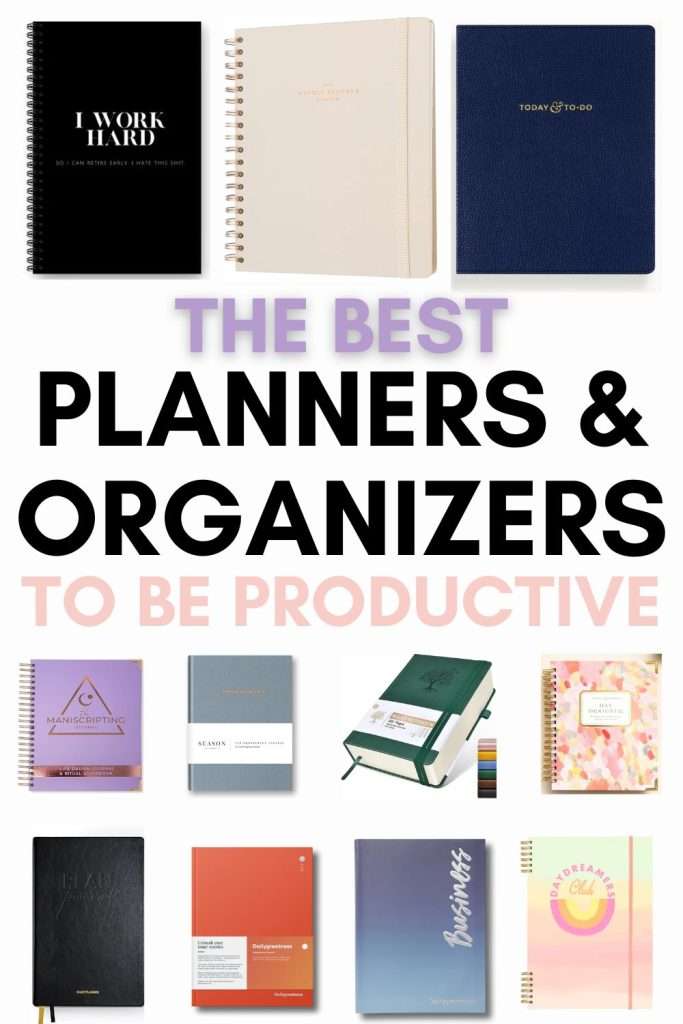
        THE BEST PLANNERS AND ORGANIZERS TO ACHEIVE YOUR GOALS

        In this post, discover a selection of top-notch productivity planners designed to assist you in maintaining organization and effectively managing your time.

        We all lead busy lives and strive to maintain productivity without compromising our well-being. Missing even a small task on certain days can disrupt our entire week, leading to unproductivity that can extend to a month or more.

        So, how can you navigate such situations?

        The key to optimizing your time lies in effective daily planning, and a productivity planner is the ultimate tool to assist you in this endeavor.

        Beyond facilitating the scheduling of your day-to-day activities, a planner also aids in monitoring personal and professional growth, fostering discipline, and boosting overall productivity to help you achieve your long-term objectives.

        If you haven’t already embraced the use of a planner to efficiently tackle your daily tasks and responsibilities, whether at work, home, or school, now is the time to start.

        With a plethora of planners available on the market, each boasting its own unique style and feature set, selecting the perfect fit for your needs can be daunting. Despite their common purpose of promoting organization, the approach to planning may vary from person to person.

        To assist you in making the right choice, I have curated a list of the finest productivity planners to guide you in accomplishing your goals throughout the year.

        Best Planners and Organizers for Productivity

        Here are 10 innovative planners and organizers designed to help you maximize your time:

        1

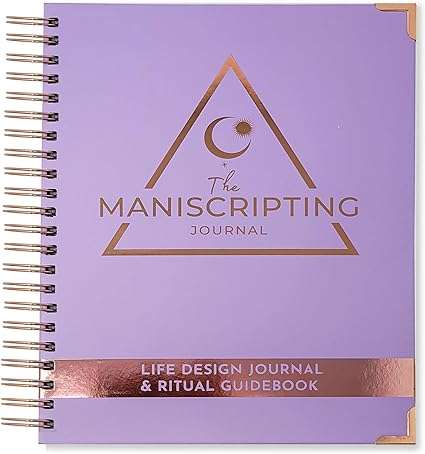
        Maniscripting Life Design Journal

        $60 AT AMAZON

        Introducing a Luxurious Undated 90-Day Journal for Goal Achievement and Manifestation

        Unlock the power of your subconscious mind with our premium Maniscripting Journal, a scientifically backed tool designed to help you realize your dreams and aspirations.

        Whether you seek happiness, love, success, or all three, this workbook and undated 90-day journal will ignite intentionality and inspire you to take action toward manifesting greatness in your life.

        Achieve Your Goals and Manifest Your Desires: The Maniscripting Journal is your key to clarity, life transformation, and soul awakening. Through the potent practice of visualizing and documenting your desires, you’ll activate your subconscious mind, paving the way to attain anything you set your sights on.

        A Self-Development Workbook and Manifestation Journal: Inside this ultimate journal, discover 50 thought-provoking writing prompts, a daily habit tracker, monthly priorities and goals list, wheel of life check-in pages, guidance on creating a vision board, an emotional guidance scale, a crystal dictionary, chakra guide, moon rituals, self-love rituals, money rituals, energy protection rituals, and activation challenges.

        These include a reading list, decluttering exercises, a lifestyle detox plan, a sleep and self-care challenge, and more.

        Over 300 Pages and a Bonus Video Course: Packed with over 300 pages of magic, this journal guides you through self-discovery, letting go of what no longer serves you, understanding your true self, identifying your passions, and uncovering your life’s purpose.

        Plus, every journal purchase includes complimentary access to a guided course, allowing you to activate your desires and connect with like-minded women on the same journey.

        THE BEST JOURNALS FOR STAYING ORGANIZED

        2

        Kokonote Misty Gray Planner

        $32 AT AMAZON

        This Weekly Planner for 2024-2025, is an essential tool designed to help you reach your goals and stay organized.

        Plan and Organize: This 17-month planner is perfect for managing your daily commitments and activities. Whether you’re a professional, a student, or a business owner, this week-to-view planner will keep you on track.

        Organized: The 2024 Daily Planner comes with a variety of features to help you customize your organizing experience. You’ll find two pages filled with stickers to personalize your cute organizer planner.

        Additionally, it includes sheets for scheduling, budget planning, setting monthly goals, jotting down your bucket list, noting public holidays, taking notes, remembering birthdays, tracking habits, planning your travels, and even shading in the countries you’ve visited on a travel map.

        Portable: It’s designed to be portable, so you can easily carry it in your backpack, school bag, or tote bag. The high-quality soft-touch cover features anti-scratch treatment, and it comes with a convenient elastic band for secure closure.

        This Weekly Planner is more than just a tool for organizing your life; it’s a companion on your journey towards achieving your goals and making the most out of every day.

        BEST JOURNALS AND PLANNERS

        3

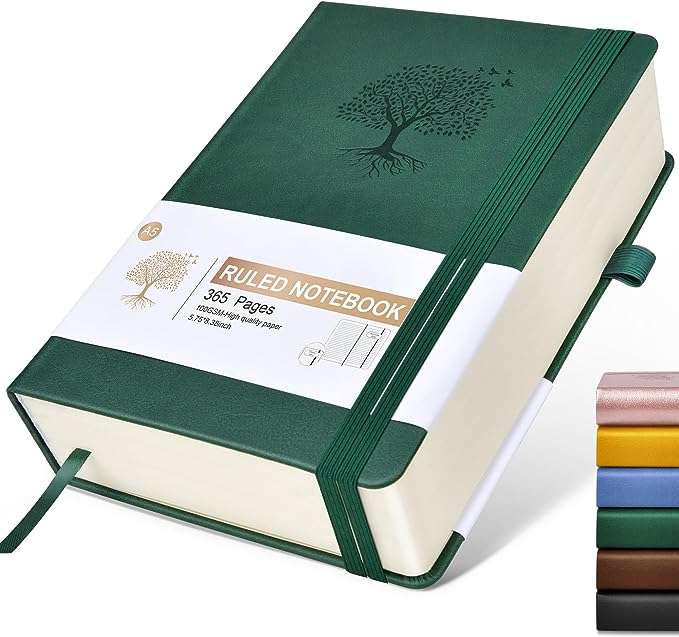
        Lined 365 Day Journal Notebook

        $16 AT AMAZON

        Inside, you’ll discover 365 pages of premium 100Gsm Lined Paper, providing you with ample space to document your thoughts, dreams, and daily experiences.

        Whether you’re an aspiring writer, a goal-oriented professional, or simply someone who loves to jot down ideas, this Ruled Notebook is tailored to meet your needs.

        Use it as your Daily Journal for work, taking important notes, or mapping out your path to success. The thick, high-quality paper ensures your pen glides smoothly as your thoughts flow onto the pages.

        Embrace the power of consistent journaling as you embark on your journey towards personal and professional growth. This journal is your canvas to brainstorm, plan, and track your progress for a full month and beyond.

        Invest in yourself and make every day count with our 365-Day Planner. It’s not just a journal; it’s a commitment to your dreams and aspirations. Get ready to turn your goals into reality with this exceptional journaling experience.

        4

        Undated Daily Planner

        $34 AT AMAZON

        With 120 undated pages, this planner is the perfect tool to help you plan and achieve your quarterly goals. What sets this planner apart is its unique dual-section design, allowing you to meticulously organize your professional and personal tasks separately.

        Key Features of the Daily Layout:

        • Clear division between work and personal sections for seamless organization.
        • Daily reflections to track your progress and insights.
        • Spacious note-taking areas for jotting down important thoughts.
        • Daily motivational quotes to keep you inspired and motivated.
        • Valuable productivity tips to boost your efficiency.

        In addition to the daily pages, you’ll also find dedicated weekly pages where you can evaluate and rate your progress.

        Overall, this planner boasts a straightforward layout that makes it incredibly user-friendly. Its minimal yet captivating premium design adds a touch of elegance to your planning experience.

        5

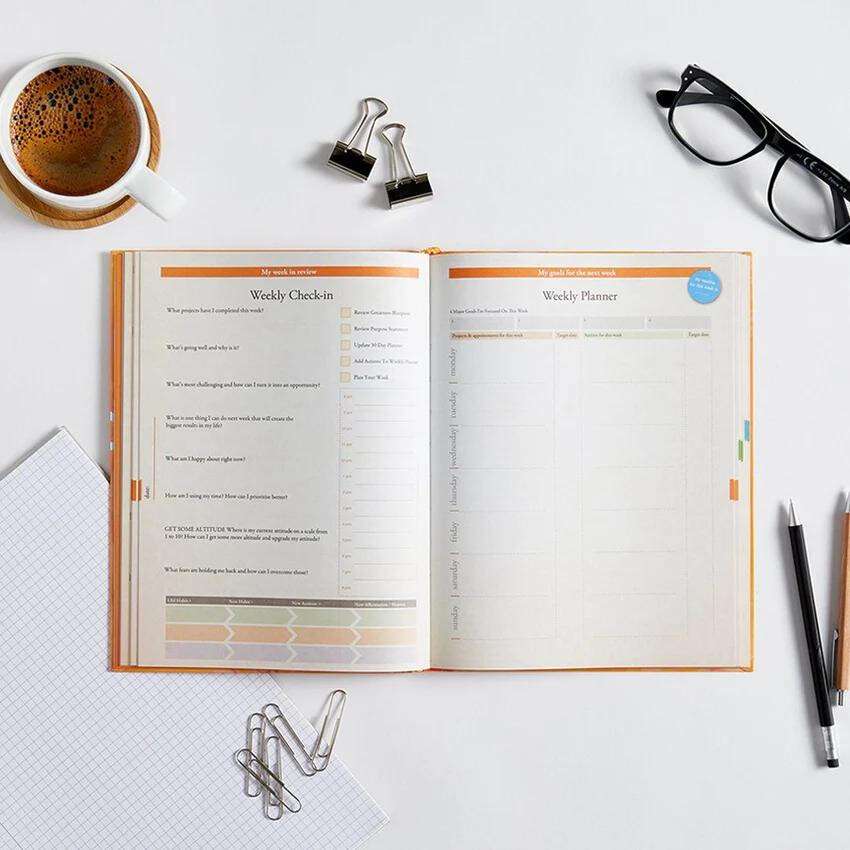
        Dailygreatness Original – Journal and Planner

        $70 AT DAILYGREATNESS

        Dailygreatness Original is our best-selling journal with a general focus on personal growth and goal accomplishments.

        Combining a yearly mindset journal, goal and appointment planner, and daily tools for self-mastery, if you’re looking for a tool to help you feel more focused and organized, be positive and grateful, and achieve your personal goals, this journal is for you.

        The pages are filled with 30-day goal planners for each month, idea spaces, reminder blocks, thought spaces, daily to-do list boxes, weekly check-ins, and weekly planners.

        This journal has it all and keeps me especially organized daily and makes accomplishing my goals all that much easier.

        6

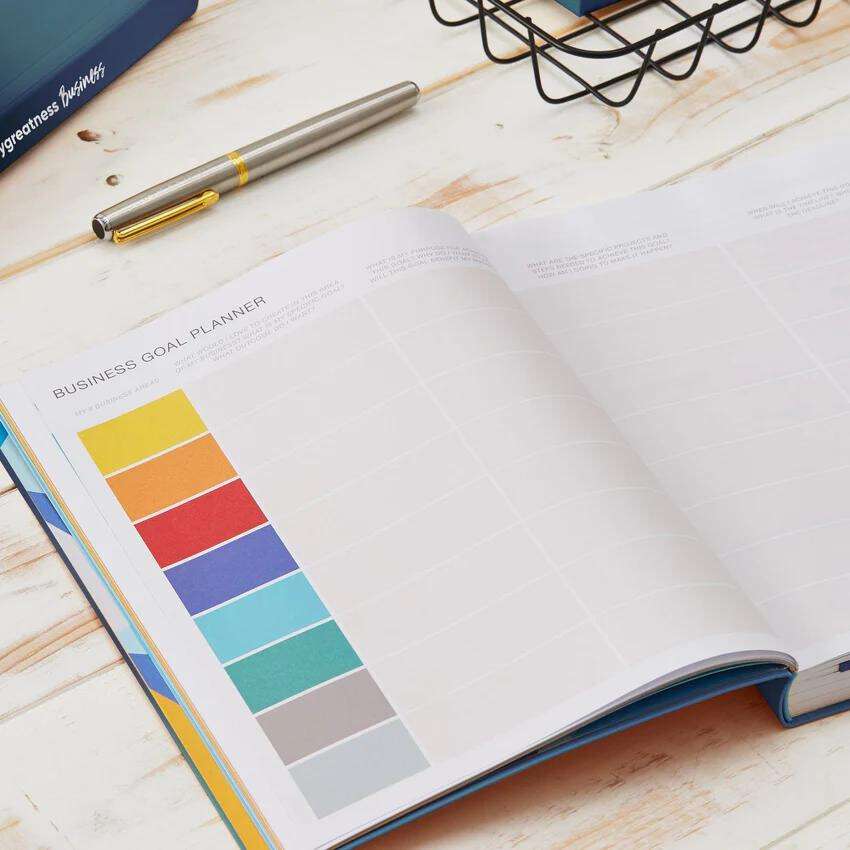
        Business Journal and Planner (Undated)

        $70 AT DAILYGREATNESS

        Dailygreatness Business is the ultimate planner for entrepreneurs and business owners.

        Encompassing everything you need to plan and scale your business, including a morning mindset, a yearly goal-planning system, weekly and quarterly check-ins, and a yearly review.

        If you’re starting a new business or want to be more organized and productive in your existing one, this business planner is for you.

        7

        2024 Daily Planner: In Sunset

        $68 AT DAYDESIGNER

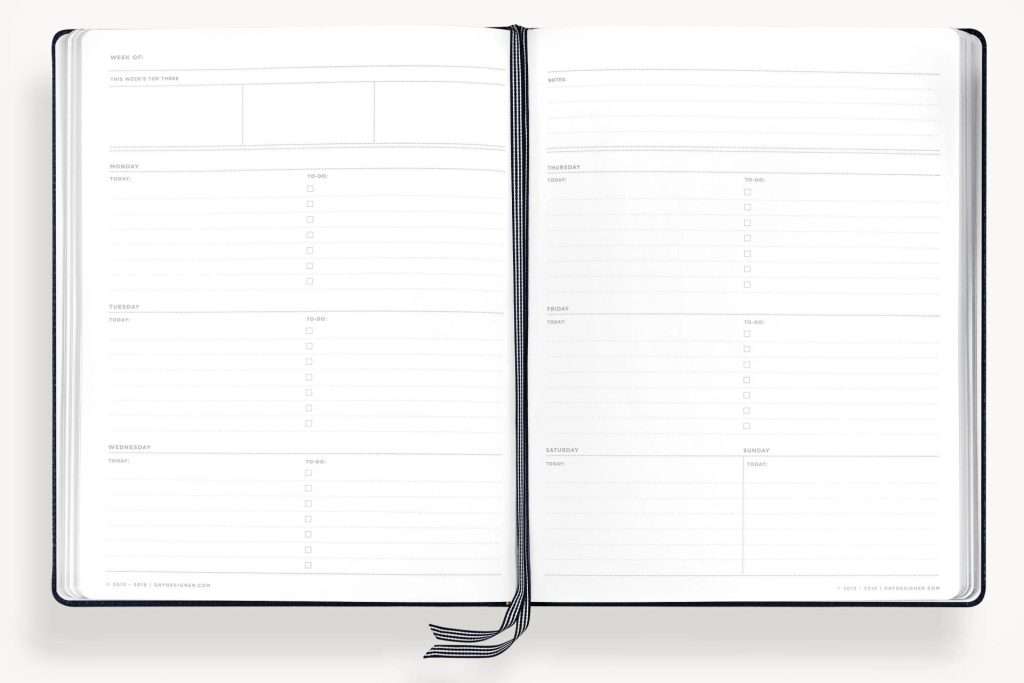
        The complete daily planner for goal-setting, productivity, and organization. Includes monthly calendar, daily schedule, to-do list, and gratitude.

        • Calendar Year: January – December 2024
        • Daily Planning Pages with Hourly Scheduling from 5 am to 9 pm
        • Today, To-Do, Dinner, Gratitude, Top 3 To-Do Prompts, Notes and more!
        • Goal Setting Worksheets to Help You Achieve Your Big Dreams
        • Daily Inspirational Quotes
        • Combined Weekend Pages with Weekly Overview
        • Gold Foil Dated Monthly Tabs
        • Two-Page Monthly Overviews with a Monday Start Day for Each Week
        • Two-Page 2024 Yearly Overview with a Monday Start Day for Each Week
        • 2024-2025 U.S. Holidays Reference Calendar
        • Daily and Monthly Pages Marked with U.S. holidays
        • Birthdays & Important Days Checklist
        • Two Gold Foil Sticker Sheets
        • Bookmark Ruler with Removeable Protective Clear Overlay
        • Blush Liner with Inside Front Cover Pocket for Added Functionality
        • Tear-Out Pages in the Front and Back of Planner to Protect Inside Pages

        Don’t forget to use my promo code DDAFFILIATE10 for 10% off the entire purchase on DayDesigner.com.

        8

        Today & To-Do Undated Planner

        $40 AT DAYDESIGNER

        This flexible system features undated daily, weekly, and monthly planning pages that can be adapted to your needs – perfect for slower seasons, extra projects, and starting fresh any time! Vegan leather cover with a polished professional look. Slim profile fits in a tote or purse.

        • Daily Undated Planning Pages with Scheduling from 7 am to 8 pm, Today, To-Do, Dinner, Gratitude, Top 3 To-Do Prompts, Notes and more!
        • Twelve Two-Page Undated Monthly Views with a Monday Start Day for Each Month
        • Fifteen Two-Page Undated Weekly Views with a Monday Start Day for Each Week
        • Ten Notes Pages
        • Goal Setting Worksheets

        Don’t forget to use my promo code DDAFFILIATE10 for 10% off the entire purchase on DayDesigner.com.

        monthly planner journal

        9

        30-Day Planner: I WORK HARD

        $20 AT ICANPLANNER

        Introducing the 30-Day Planner – Your Ultimate Goal-Achievement Journal!

        This remarkable 30-Day Planner is your go-to tool for unlocking your full potential and reaching your goals. Here’s what it includes:

        Undated, Full Month Outlay Planner: This planner gives you the flexibility to start anytime you want. It provides a clear overview of the entire month, allowing you to plan ahead with ease.

        Set Your Life Goals: Begin your month by setting your life goals and taking stock of your current life status. It’s the perfect way to align your aspirations with your present situation, setting the stage for impactful planning.

        Weekly Planning Pages: Stay organized week by week with dedicated planning pages. Keep track of important appointments, events, and tasks to ensure you’re always on top of your game.

        Daily Planning: Dive into the nitty-gritty details of your day with daily planning sections. Set specific goals, jot down your to-do lists, and schedule your activities in 30-minute increments for both day and evening. This level of precision ensures you make every minute count.

        Month-End Goal Review: As the month wraps up, take a moment to review your goals and assess your life status once more. This reflective practice helps you make necessary adjustments and keeps you on the path to success.

        Dream Pages: Unlock your creativity and brainstorm your dreams with two dedicated pages. Use them to sketch, jot down ideas, or visualize your aspirations.

        Journaling: Foster self-reflection and personal growth with ten journaling pages. Document your thoughts, experiences, and insights to gain a deeper understanding of your journey.

        Future Months: Plan beyond the present with two years’ worth of future months. You’ll find dates and sections for notes, allowing you to easily schedule upcoming events and commitments.

        With the 30-Day Planner, you’ll have a powerful companion, guiding you through each month with precision and purpose. Say goodbye to scattered planning and hello to a more organized, goal-oriented life.

        This journal is your key to unlocking your full potential and turning your dreams into reality. Start your journey today!

        THE BEST JOURNALS FOR PLANNING

        10

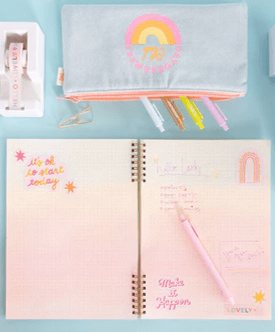
        Daydreamers Bullet Journal

        $22 AT TALKINGOUTOFTURN

        Are you familiar with the concept of bullet journaling?

        If you are, then you’re in for a treat because this journal is tailor-made for enthusiasts like you. And if you haven’t delved into bullet journaling yet, don’t worry, we’ve got you covered.

        This journal offers you the flexibility to experiment with bullet journaling, unleash your inner doodler, or simply pour out your thoughts on its pages. The true beauty of this journal lies in its adaptability; you can customize it to suit your unique needs and preferences.

        No matter what type of journal or notebook you’re seeking, our collection is brimming with charming options. Good luck trying to pick just one from the array of appealing choices!

        But don’t forget the essentials! Make sure to stock up on pencils, jotters, and a delightful pencil pouch to complement your journaling experience.

        11

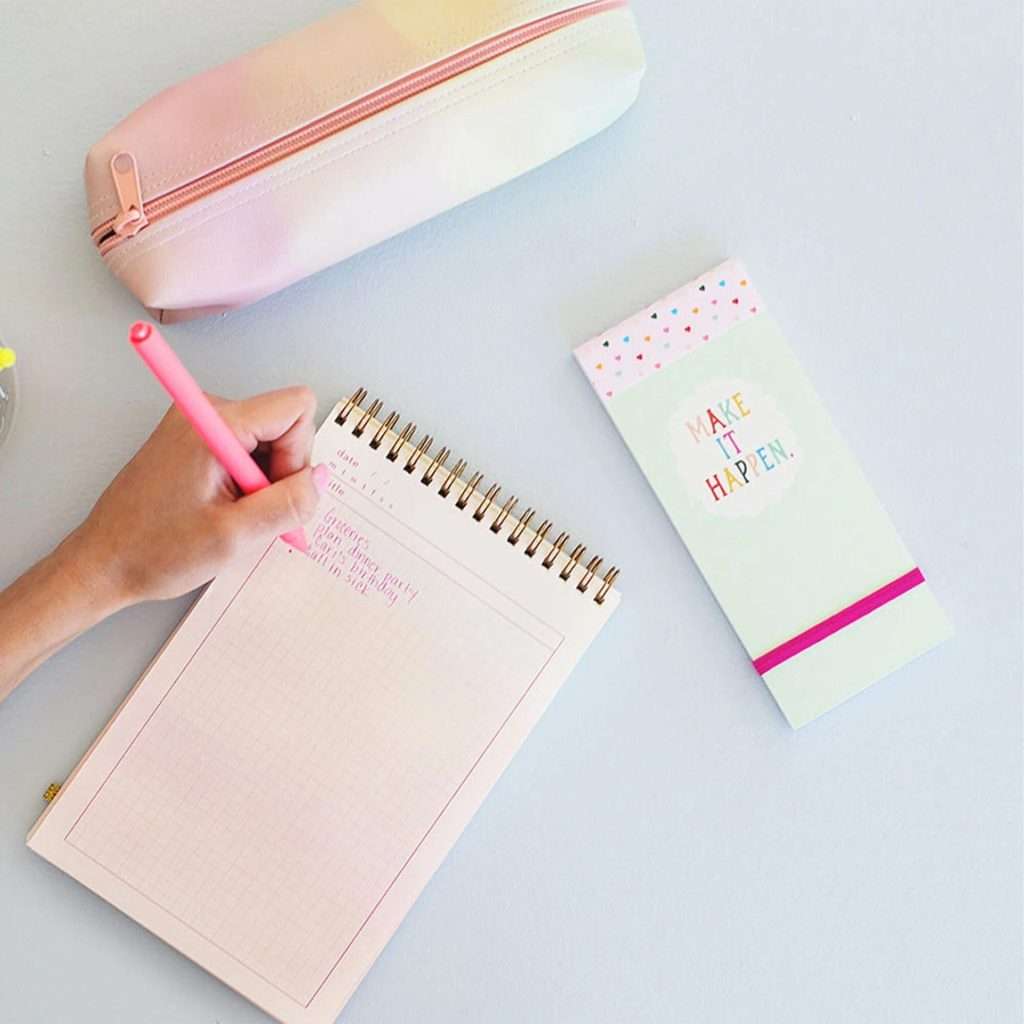
        Make It Happen Taskpad

        $10 AT TAKINGOUTOFTURN

        Introducing the Taskpad, the ultimate companion for individuals with dynamic lifestyles, now, this goes well alongside a journal, not as a stand-alone.

        Seamlessly flip through its pages with grace and flair, choosing between the convenience of a spiral-bound format or the timeless elegance of a classic binding that lets you fold its exquisite sheets.

        Whether you opt for the modern or classic version, one thing is certain: when you jot down your tasks in the Taskpad, you’re significantly boosting your chances of achieving them.

        So, don’t hesitate—dive into the world of productivity, taskmasters!

        This concludes our list, and I trust that this article on the best productivity planners has assisted you in finding the perfect match for your needs.

        THE BEST PLANNERS AND ORGANIZERS TO ACHEIVE YOUR GOALS
        THE BEST PLANNERS AND ORGANIZERS TO ACHEIVE YOUR GOALS
        THE BEST PLANNERS AND ORGANIZERS TO ACHEIVE YOUR GOALS
        [jetpack-related-posts]

        10 Bad Habits That Make You Less Productive In The Mornings

        Filed Under: Productivity // 05/17/2023

        10 Bad Habits That Make You Less Productive In The Mornings

        Mornings signal the start of the day and bring with them new hope. However, many of us end up developing some bad morning routines as a result of our fast-paced lives. So much so that, even though we are aware of the damage they cause, we are hesitant to alter our behavior as long as it keeps us ahead of the competition.

        These bad morning habits negatively influence our physical and mental health, even though they may not be felt right away. As a result, we need to think about identifying and altering them.

        Our mood and the quality of our night’s sleep immediately affect whether we have a good day when we wake up. While some of us like to snooze until the very last second, then jump out of bed and finish everything we need to before leaving the house, others prefer to wake up slowly and give themselves additional buffer time to avoid the rush. The latter is typically the best choice for most people because our morning routine often determines how the remainder of the day will go.

        Setting up a healthy morning routine can therefore give you a sense of control and result in a positive attitude that takes you through your daily to-do list. On the other hand, when we inadvertently begin our days by casually scrolling through our phones, we start our days in a reactive rather than a proactive manner. Because of this, you might be less successful in reaching your own objectives and have less control over how your day will go. Additionally, exposing yourself to anxiety, dread, or comparison when you first wake up can shape the way you view the world.

        10 Habits That Make Your Mornings Unproductive

        It’s time to end the continual cycle if you find yourself falling into this pattern. Here, I outline the 10 factors that could be hindering your mornings and lowering your general productivity for the day.

        1. Hitting The Snooze Button

        Even though pressing the snooze button might seem like a convenient way to get a little extra sleep, it doesn’t actually help you relax. In reality, you’re only adding to your stress because you’re squeezing in less time than necessary for getting ready and preparing your mind for the day. Additionally, when we do this, we miss out on essential aspects of life that we ought to be concentrating on. Instead, we should go to bed earlier or set an alarm for a time that will allow us to wake up feeling rested.

        We should rather work to change our habit of snoozing the alarm in order to better our sleep cycle. Try to find something to look forward to in the morning that will motivate you to get out of bed at the first sound of your alarm if you are snoozing at the cost of being on time. Perhaps it’s making plans to eat your preferred breakfast food or setting the coffee maker so that a hot cup is available when you are.

        Related Post: How To Stop Hitting The Snooze Button And Become A Morning Person.

        2. Not Having Enough Time To Wake Up

        It’s crucial that you have enough time to awaken completely, which takes at least 30 minutes. You run the risk of being swept away by the people and circumstances you meet and having your energy drained if you don’t have time to truly wake up. Instead, pause for a moment to appreciate the beauty of being present, feel your surroundings, notice your breathing, and express appreciation for everything that you have in your life.

        3. Using Your Phone First Thing When You Wake Up

        You might consider checking your phone as soon as you wake up in an effort to catch up on anything you might have missed throughout the evening. However, this habit can make you less productive and just add a damper to your day. Depending on what you read, scrolling can not only take up a lot of time and cause you to rush the rest of your morning, but it can also make you feel anxious or agitated.

        Have a quick, five-minute guided meditation prepared instead of jumping on social media or reading your email, or stretching in bed. Alternately, set your alarm to play music and, rather than turning it off, stretch for a few minutes while listening to it before getting out of your bed.

        4. Not Making Your Bed

        Making your bed may seem like something that is only done for show, but it actually helps you prepare for a productive day. An energy flow and a framework are both necessary for productivity. You won’t be motivated or creative without an energy flow, and you won’t be organized or likely to get much done without an order if you lack both.

        Making your bed every morning as a ritual gives you a foundation on which to construct your day. This straightforward achievement builds muscle for completion and organization over time, which results in a feeling of well-being and other successes.

        5. Skipping Breakfast

        Breakfast is defined as when you consume a meal after a lengthy seven-to-eight-hour sleep cycle, (breaking the fast). Furthermore, since this is the most important meal of the day, we shouldn’t skip it in order to have more time in the morning for other activities.

        Long-term effects of prolonged hunger on our health are noticed in people who skip breakfast. Therefore, we should eat whole foods first thing in the morning and boost our intake of fruits and vegetables. If you don’t have the opportunity to prepare healthy meals every day, think about meal planning for the mornings.

        6. Carb Loading

        For many people, pancakes, and donuts may be the most enticing breakfast option, but they can send your blood sugar on an up-and-down roller coaster, causing a high spike and a collapse. If you begin your day with simple carbs, you can anticipate a blood sugar crash a few hours into the morning, which can undermine your productivity, mood, and concentration.

        Our mood and focus follow our blood sugar levels. To start the day, balance your carb intake with protein, good fats, and leafy vegetables. Consider adding eggs, avocado, nut butter, or vegetables to your smoothie or toast. You’ll be most productive if you eat to maintain a healthy blood sugar level, so keep protein, fiber, and healthy fats in proportion.

        Breakfast stabilizes the amount of sugar in the food we eat and maintains digestive health without making us feel bloated. Additionally, I advise consuming foods that are simple to digest and that encourage improved metabolism in the morning.

        7. Not Drinking Water

        Monitoring your body’s water levels is one of the most important daily habits that many people overlook completely. A healthy gut and metabolism can be supported by drinking enough water first thing in the morning and continuing to remain hydrated throughout the day. We can boost our immune systems, avoid poor breath and bladder infections, and more by hydrating in the morning. Start forming the habit of beginning your day with plenty of water and detoxifying beverages if you want to stay healthy and productive.

        Related Post: How To Drink More Water By Switching To Lemon Water.

        8. Drinking Coffee

        Yes, drinking coffee first thing in the morning is on the list of poor morning habits, and doing so before 9:30 a.m. is not advised. Between the hours of eight and nine in the morning, our body naturally produces more cortisol, a stress hormone that controls energy. Coffee consumption during this period can throw off our body’s natural cortisol monitoring mechanism. However, it’s thought to be best to have a normal cup of coffee at noon. Drink a tumbler of water to stay hydrated while preparing a cup of coffee.

        9. Not Exercising Or Moving Your Body

        Lack of a morning exercise regimen is another bad morning habit, though its effects may not become apparent while we are still young. One of the best things we can do for ourselves is to incorporate exercise into our daily routine. Just 15 to 30 minutes of early exercise can boost both physical and mental productivity. Exercise in the morning can also help to increase metabolism, which maintains us in shape.

        If you feel you don’t have time to squeeze in a morning workout, try walking to work or cycling there rather than always taking your car or public transport.

        10. Not Having A To-Do List

        Setting an objective or making a daily to-do list is important for having a productive day. This is due to the fact that the list helps our subconscious mind stay on top of the routine even when we are asleep and gets us ready to wake up when the alarm goes off for the first time. As a result, we have a simple start to our day and never want to stay in bed longer. A to-do list makes it easier to accomplish all of the daily tasks.

        [jetpack-related-posts]

        12 Lists To Make You Stay Organized

        Filed Under: Organization // 05/02/2023

        How to organize you entire life with 12 lists

        Making lists is a great way to organize your life. They aid in your ability to visualize and stimulate your mind. Additionally, they are a productive way to stay on top of your obligations and objectives!

        Which is why I’ve put together this practical list of 10 lists you need to help you get organized.

        Consequently, if you want to learn what lists to create in order to stay organized, keep reading! These are the lists you should make in order to organize your life.

        I want to quickly highlight the advantages of lists before we dive right into this list of useful lists. There are countless other benefits and ways that making lists can be helpful for you.

        You Might Also Love: 15 Desk Hacks To Make You More Productive At Work

        How Lists Help You Stay Organized

        Help You Not Forget

        You may avoid forgetting key events, appointments, or to-dos by keeping track of everything on your mental to-do lists with the use of written lists.

        You won’t have to worry about constantly trying to recollect things from memory because writing down your to-do list each day or each week will offer you something to refer to.

        You can refer back to your lists to realign your focus when you start to lose track of things or miss items.

        Prioritizes Your Time

        You may create a strong strategy for your time with the use of lists, which will help you spend less time pondering what to do next.

        Just consider how much time you’ve wasted in the store wondering what to have for dinner tonight, maybe you should make a list for that!

        Makes You Feel In Control

        You can feel more grounded, calm, clear, and less stressed by making lists.

        Making lists can help you feel more organized and better able to handle everything that needs to be done.

        Lists can help you organize the flood of information in your mind (such as upcoming work assignments, errands to run, and the areas of your home that need to be cleaned).

        –They also assist in making sure you don’t miss anything! We all experience moments of forgetfulness, and lists can prevent us from overlooking crucial information.

        –Lists make it simple and effective to exchange information. As you can see from the list below, many of them are excellent resources for gathering information to share with your family (or friends!) so that everyone is on the same page.

        Like the shopping list for meals!

        -By making sure you know what you want, they can make you feel like you have more control over your life!

        And one of the main reasons getting organized is so advantageous is that it makes you feel in charge of your life.

        -Helps with keeping yourself on track by creating life and household lists that will manage your life.

        -It helps to cleanse your thoughts and avoid mental clutter.

        -Additionally, making an actual to-do list will make you responsible for finishing tasks.

        -You can organize your home, save money and time, and set goals by creating organizational lists.

        Choose the list formats that will help you keep organized. Make a list if you want to accomplish anything, pay off debt, or just get things done around the house.

        As you can see, lists are crucial and can really improve your feeling of organization. So continue reading to learn how to stay (and get) organized with lists!

        You Might Also Like: A Guide To Achievable Monthly Goals

        10 List Ideas To Get You Organized

        Getting a notebook you like is the first step in keeping these lists and organizing yourself.

        These are the lists you should develop to organize your life, and having them in a single location, like a notebook, will make it much simpler!
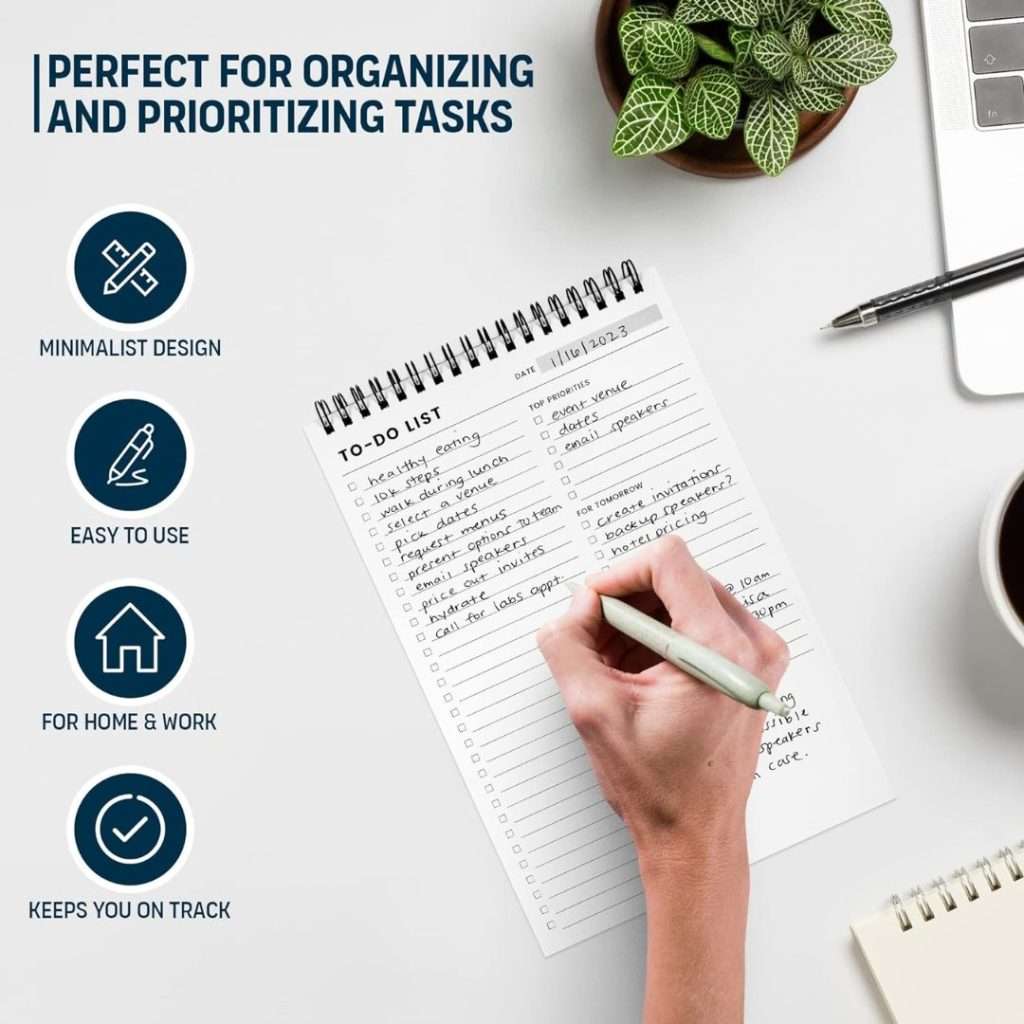
        1. Daily To-Do Lists

        To Do Lists To Organize Your LIfe

        The most useful list you can use to stay organized is definitely a daily to-do list.

        There are many various to-do list ideas available, but my personal favorite is the daily one. You prioritize everyday tasks when you create a daily to-do list.

        You’ll feel more productive and less disorganized after writing down your daily tasks and crossing them off the list.

        It is the ideal list for life organization! Every time you cross something off your to-do list or cross it off your list, you are minimizing your daily stress.

        You can write your to-do list on a cool note-pad like these ones available on Amazon! (Click the images to shop!)

        Bliss Collections Daily Planning Pad, To Do List Notebook
        To Do List Notepad: With Multiple Functional Sections

        You Might Also Like: The Power of Time Blocking For Productivity

        2. Goal Lists

        What are your goals?

        Making lists of your goals, both short-term and long-term, is a great way to stay focused on your goals and priorities.

        Make a list of your goals, whether they be for your life, your house, your weight loss, or even your finances.

        You’ll get there faster even if you only put them in writing. Keep the list in a visible location. Perhaps in your planner or on your refrigerator.

        You’ll remain committed to achieving your goals just by looking at your list of them!

        If you don’t have goals, you can’t know what you’re striving for or working toward.

        Making a list of the tasks you want to complete during the following month, three months, or year can really help you work towards accomplishing them.

        If you want a planner that includes Goal planning and tracking, here are my favorites. (Click images to shop now.)

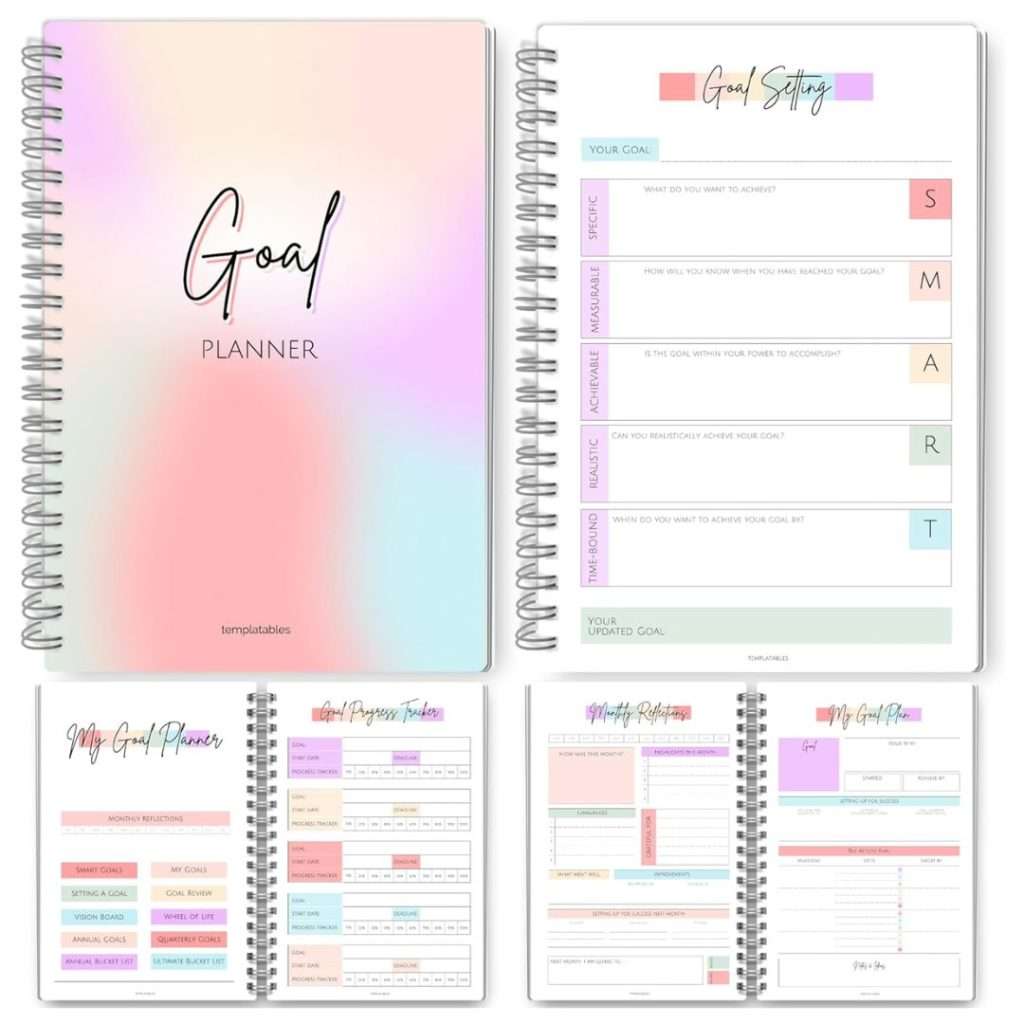
        Goal Planner | SMART Goal Setting Kit for the New You
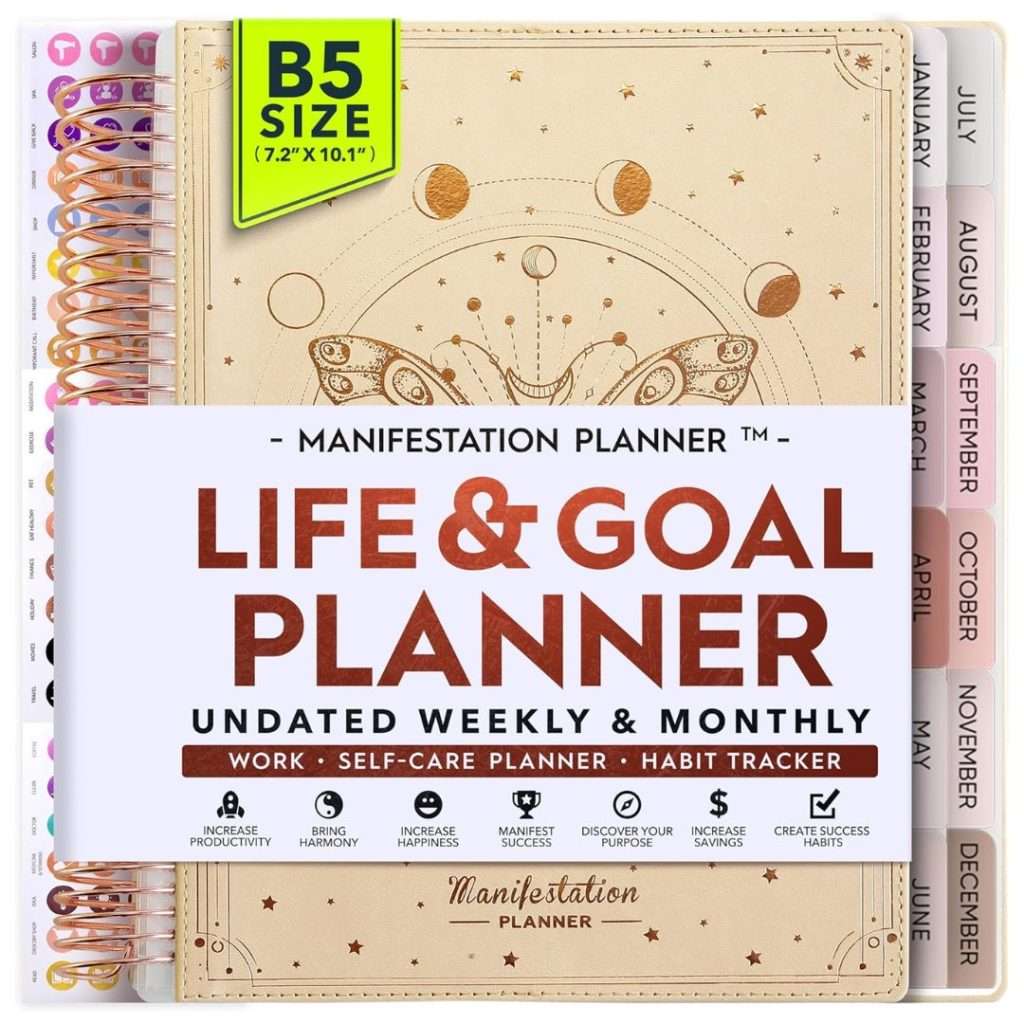
        Manifestation Journal – Goal & Life Planner, Undated Weekly & Monthly Planner to Achieve Your Goals

        Related Post: The Ultimate Guide to SMART Goals You Can Actually Achieve

        3. Progress Lists

        You must schedule time each week and month to assess your progress, keep tabs on your outcomes, and draw lessons from them if you want to position yourself for success.

        If you don’t know how you are doing, you can’t track your development or make plans for the future.

        To position yourself for success each and every week, you need a system. These lists will not only help you stay organized, but they will also keep you on track with your goals.

        You Might Also Like: How To Set Up A Planner And Actually Use It!

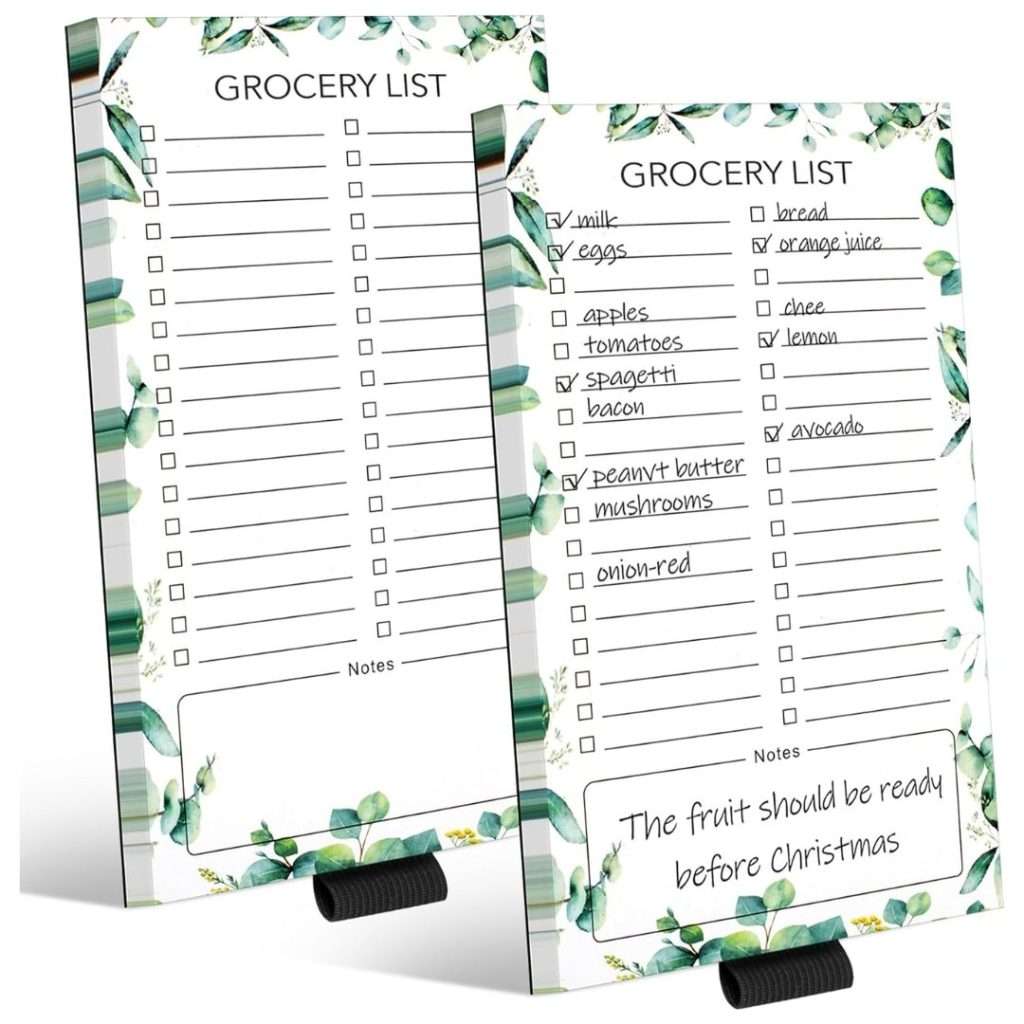
        4. Shopping Lists

        It helps to make a list of the items you’ll need at the store. You might overlook the necessity for tape when you go shopping in a week.

        Make a list of everything you need to buy before entering any store.

        We all know that a trip to the neighborhood Target can result in a lot of pointless spending in no time. Nothing is worse than forgetting to buy something you needed.

        Have you ever gone shopping without a list, purchased a number of items, and returned home only to discover that you once again neglected the item you most needed?

        Until I started using a shopping list, it was the same here.

        About once or twice a month, I run errands. I always have a running grocery list, so whenever I need something, I instantly jot it down.

        I use my shopping list primarily for items that I frequently forget. In order to avoid leaving it at home, I have it on my phone.

        I always have my phone with me, so I always have my shopping list.

        Additionally, you’re more likely to remember things if you write them down as soon as you notice you need them rather than expecting to remember on the one day a week you typically draw out your grocery list, so having a running grocery list is also helpful.

        If you don’t like having your shopping lists on your phone, here are great shopping list note pads you can use to keep you on track in the store! (Click images to shop)

        Joyberg 2 PCS Magnetic Grocery List Pads for Fridge
        Evercio Meal Plan & Grocery List Magnetic Notepad for Refrigerator

        You Might Also Like: The Best Planners To Reach All Your Goals

        5. Meal Planning Lists

        Staying organized is made so much easier by keeping a running list of the meals you’ll be eating over the next week or so.

        It guarantees that you can avoid arguments about what to eat and that you are aware of the foods you need to buy.

        Additionally, it aids in reducing food waste, which is crucial right now more than ever.

        For your refrigerator, you can also purchase a cute meal-planning list pad like this one. I’m aware that it initially sounds laborious, but once you master it, you’ll save a ton of time and money!

        Just knowing what is for dinner makes me feel so much better.

        List of favorite restaurants for take-out:

        This is useful for days when you just don’t feel like cooking.

        Having a list of your family’s favorite restaurants and the menus will really help you out.

        You could also make notes about which offers curbside pickup or deliveries and your family members’ orders for each restaurant!

        You Might Also Like: How To Work From Home, Stay Productive And Be Super Organized

        6. Make A Budget

        Make a budget monthly to stay organized

        Writing a budget is something that every household should do.

        This will vary on your particular family’s budget and preferences, but I have discovered that keeping a general summary of my income and expenses enables me to generally maintain control over my finances.

        Even if everything is on debit order like I do, I also have a monthly spending list for recurring monthly fees which is incredibly helpful! You may save money and eliminate wasteful spending when you budget your expenditures.

        Make A Bill Tracker List:

        It just makes sense to track your bills. It enables you to manage your finances. Your life will be easier to organize if your bills are organized.

        A bill tracker will help you manage your money and prevent late payments. You’ll keep track of which bills are overdue and which ones have previously been settled.

        Here are great budget planners you can use to get your finances in order! (Click images to shop)

        Budget Planner - Monthly Finance Organizer with Expense Tracker Notebook to Manage Your Money Effectively
        Budget Planner & Bill Organizer - A 12 Monthly Planner Journey to Financial Freedom

        You Might Also Like: 10 Bad Habits That Make You Less Productive In The Mornings

        7. Make Cleaning Lists

        Having a list of what to clean is essential if, like me, you only do the bare minimum when cleaning.

        Years later, I still wonder why my home is a mess, and the answer is that I haven’t been thoroughly cleaning the various rooms.

        So now I have a particular list for each section of my home that needs cleaning, along with step-by-step directions.

        Daily And Weekly Cleaning List:

        Your house and sanity will never be better after you establish a daily and weekly cleaning schedule. Seriously, you need to make a list of the weekly and daily cleaning tasks.

        You’ll have so much time to spare! The house may seem to need cleaning all the time, yet it never seems to be clean.

        It will be a game-changer once you overcome the overwhelming clutter and established a daily cleaning schedule!

        Spring Cleaning List:

        Nothing makes you feel better than coming home to a tidy house as spring approaches.

        A comprehensive spring cleaning actually keeps your house in tip-top shape and makes you feel better. Make a note of everything that needs to be cleaned up in your house for spring.

        Use this list of spring cleaning must-dos as a handy cheat sheet if you’re feeling confused about what to do.

        Declutter Lists:

        Keep a note of what needs to be organized or decluttered so that you have a wonderful place to start when you have the chance to declutter.

        When you have the time to spend on organizing your home, this is quite useful.

        You Might Also Like: How To Save An Unproductive Morning To Have A Productive Day

        8. List Important Dates

        Make a list of everyone’s birthdays and anniversaries so you never forget them.

        Making a list like this is a must if you want to stay organized and keep your life simple, and avoid awkward apologies for forgetting important dates.

        Therefore, take the time to note important dates you don’t want to forget.

        Gift Ideas List:

        I’ve been able to get gifts for my loved ones that have been well appreciated by making a list of practical items that I know people need or have mentioned that they want.

        You can avoid purchasing last-minute garbage gifts by making a list of possible presents and whipping it out on special occasions.

        You Might Also Like: How To Make Your Days More Productive In 5 Easy Steps

        9. Username And Password List

        It can be quite handy to save your login and passwords on a separate notebook page that you do not carry with you.

        Keep in mind that creating unique, random passwords for each account you have is significantly safer. This well-organized list can really aid in keeping your life in order.

        We now need to remember a lot of passwords as everything becomes digital. It’s risky to save all of your passwords on your phone or computer.

        As a result, you should compile a list of all of your passwords and save it somewhere secure.

        Additionally, giving your loved ones access to your passwords would be extremely helpful in the event that something were to happen to you.

        You Might Also Like: The Best Times of Day to Be Productive

        10. Food Inventory Lists

        Do you keep a food inventory? It has really helped me stay organized.

        I maintain lists of the food I have in my refrigerator, freezer, and pantry.

        This will avoid you from running out of fundamental items by keeping a list of the food you have on hand.

        Being able to keep track of the food we have is also a huge advantage of creating a food inventory list.

        preventing further purchases of what you already own and ensuring that your family consumes it before it spoils will help you save money.

        Make sure to not expiration dates and “use by dates” to plan meals accordingly to avoid wasting food.

        You Might Also Like: Habits That Are Ruining Your Productivity

        11. Habit Tracker List

        Do you know what a habit tracker is? Over the past few years, they have gained a lot of popularity.

        They are fantastic tools for creating or breaking habits. Healthier behaviors need to be adopted by all of us.

        You can accomplish your objective by creating a list of good behaviors you want to start and negative habits you want to stop.

        It’s a good idea to monitor your moods as well.

        You Might Also Like: How To Stay Motivated And Achieve Your Goals

        12. Packing Lists

        To guarantee you don’t forget anything, make a packing list. I believe that making a packing list before you travel is much more crucial.

        Have a list of the items you’re most likely to forget, such as the phone or camera chargers still plugged into the wall, the shaver, or anything else you could have left in the shower, your toothbrush, etc.

        Now you know 12 Organizational Lists To Make Life Easier And More Organized! These lists to write can be so helpful for getting your life in order this year!

        [jetpack-related-posts]

        How To Save An Unproductive Morning To Have A Productive Day

        Filed Under: Productivity // 04/29/2023

        Productive habits that will help you save an unproductive day

        Everybody’s definition of a productive morning is different: It can entail getting in a workout before 8 a.m., thawing dinner before leaving the house, responding to all of your unanswered emails over your first cup of coffee, or polishing your presentation before a big meeting.

        However, feeling productive has advantages beyond merely checking things off your to-do list; it can influence how you feel about yourself throughout the day. You feel like you’re on a roll and keep going after a productive morning.

        When we fulfill our goals, we feel a sense of accomplishment, and this emotion might encourage us to keep moving forward. And even when your morning is a disaster—you feel groggy and sleepy, and you forget about your workout—the presentation abandoned—it’s never too late to reset.

        How To Save An Unproductive Morning

        There is no use concentrating on what is past due, what we ought to have done, or the fact that we ought to be further along than we are. We must face the fact that we are where we are, and the sooner we do so and create a new strategy based on our current situation and the time we have left, the more effective we will be. Here’s a guide on how to achieve that.

        1. Reset

        Take a moment to collect your thoughts and reset before the pressure of your to-do list, which is now obvious to be impossible to complete, sends you into full-on panic mode. This mode manifests itself as either trying to complete everything at once in a panic or spending the rest of the day procrastinating.

        Consider how you’re feeling and what has occurred—perhaps you were asked to assist with a coworker’s project, your team meeting lasted too long, or you are fatigued and unable to concentrate—and adjust your expectations accordingly.

        You can also get some mental clarity through physical activity: Try doing 100 jumping jacks, a few minutes of deep breathing, a short walk or jog, or some dancing and singing.

        2. Readjust

        It’s time to review your to-do list once you’ve calmed down. What absolutely needs to happen and what may be delayed without negative effects? Make a realistic strategy for what will allow you to feel as though you had a productive afternoon, whether that means completing all the little things on your list or making significant progress on a long-term project.

        Take into account your energy levels and the rest of the day’s responsibilities. Your perspective is crucial in this situation as well; envision yourself starting now rather than catching up. Catching up makes us feel perpetually behind, whereas starting now feels deliberate and purposeful.

        3. Re-Work And Plan For Tomorrow

        Rework your nightly schedule to include time for preparations that can help things go more smoothly, regardless of whether you’ll make up for today’s delay tomorrow or you find your mornings to be typically unproductive.

        Make sure you have a realistic plan for what you’ll do the following day given the time you have available. Then, change your schedule to reflect this. Look at your calendar for the following day and compare it to your task list. You can avoid wasting a lot of energy by doing this at night and not during the morning.

        You can immediately begin carrying out your to-do list from your prioritized list when you sit down to work. End-of-day planning makes sure you’re efficient with your time and proactive rather than reactive. Before you even check your email in the morning, start working on your most challenging, unpleasant, or stressful chore.

        As Brian Tracy would say Eat the frog (the name of a time-management proverb). The premise is that if you have to eat a frog every day, eat it first thing in the morning and everything will taste sweeter for the rest of the day. Starting your day with the most difficult work will give you an extra burst of motivation for the rest of the day.

        [jetpack-related-posts]

        How To Make Your Days More Productive In 5 Easy Steps

        Filed Under: Productivity // 04/18/2023

        how to be more productive in 5 easy steps

        We all fight with trying to be productive in our day-to-day lives. Most of the time, some days will be highly productive while others may not.

        We all want to be productive every day, therefore my hope is that reading this may help you learn something new or be motivated to work more. While we have no control over everything that occurs in life, we DO have some control over how effective we can be.

        We cannot wait for the perfect moment to begin in order to be productive. To make it happen, we must design that ideal moment ourselves.

        5 Ways To Be More Productive

        Unfortunately, if we don’t know how to manage our time well, the majority of it can be lost. I have a few tips that can be helpful if you’re sick of feeling like you don’t do enough during your workday.

        1. Have A Good Morning Routine

        There isn’t a better way to begin the day! Everyone can have an organized morning, regardless of the time they wake up.

        Finding what you need to get out of bed is the first step. Maybe it’s setting multiple alarms, leaving your phone across the room to get up and turn it off, or maybe even just doing a few jumping jacks as soon as you wake up. Do whatever it takes to remove the sleep from your eyes.

        Try waking up and engaging in an activity to get your body and mind moving. Do what best suits you, maybe do some yoga, stretching, or HIIT workout in the morning.

        Or you might try morning meditation and journaling, which is excellent for focusing your thoughts and allowing you to begin the day fresh.

        2. Have A Daily Plan

        You should always have a plan for your day, whether it’s in your daily planner or notes on your phone. If you don’t know what you need to do, you won’t be able to do much! Setting priorities for your agenda is the secret to a successful workday.

        You’ll be more organized and productive if you set aside ten minutes each day to get ready for what lies ahead. Do you need to make a to-do list or an hourly schedule? What will help you remember your tasks the best? Do you have any upcoming events or meetings? Do you have any emails to send? Write down everything no matter how trivial it may seem.

        Because not every task will be urgent, understand your priorities. In actuality, there are moments when you must be willing to set some things aside. Keep an eye on the deadlines, as they will always be a great method to direct and plan your workflow.

        Don’t worry if you can’t finish it all in one day. There is always tomorrow, for this reason. Simply make a new list for the following day, and prepare yourself to complete it as efficiently as possible. Make careful to cross off every task as you finish them during the day. Nothing beats the sense of satisfaction you get from seeing all the tasks on your to-do list crossed off.

        Make daily, weekly, and monthly goals. Keep them in a place that is simple to get to. It’s simpler to stay focused on what’s most crucial when you have your daily goal in sight.

        3. Take Care Of Yourself

        Being productive requires feeling well and energized because you can’t accomplish anything without it. Be sure to get adequate sleep, drink lots of water, eat wholesome meals that give you energy, exercise, walk or run, stretch, and take deep breaths.

        Whatever makes you feel strong and healthy!

        This will assist in setting you up for success in completing your day’s tasks. Even if you grasp all the other productivity hacks on this list, you’ll still be lacking a crucial productivity component if you don’t take care of yourself.

        Your capacity to maintain concentration and complete activities depends primarily on your mind and body. Before you can take care of anything else, you must take care of yourself!

        4. Keep Your Environment Clean

        The next step is to tidy up your area. Being disorganized at your desk or work area will not help you stay focused all day. Make sure you only have the tools and supplies you need to finish your activity or task and tidy up your workspace.

        I like to have a tidy desk, a cup of tea or coffee, my computer, and sometimes some music, and then I can start writing in a productive environment. Instead of waiting for the ideal circumstance to arise, I prefer to create it. Because it might never happen that perfect moment. Create it yourself, then!

        5. The Pomodoro Technique

        Although the Pomodoro Technique has been around for years, the most efficient way to do it right now is through a phone app. There are many strategies to organize your time, but I’ve always found the Pomodoro Technique to be one of the most effective.

        It is easy to do, you begin by choosing a task and establishing a 25-minute timer. The objective is to maintain your attention and fully commit to the task over that period of time. You get a five-minute rest after your timer goes off!

        Take a stroll, grab a snack, or check your emails—do whatever you want during this break.

        The cycle will then be repeated once more. After completing four Pomodaros, you are entitled to an extra-long break of 15 to 30 minutes. This gives your mind a chance to recharge before beginning a brand-new round.

        The Pomodoro Technique is one of my favorites since it fairly divides your focus between work and leisure time. Even if the Pomodoro Technique won’t work best for everyone, it’s worth a shot. Finding a time management strategy that works for you and using it consistently should be your main priorities.

        It’s clearly time for a change if you frequently experience the midday slump at work. You can develop a more productive lifestyle that will make you feel content and successful by incorporating new tactics!

        These are the five things I do to increase productivity. Knowing how to be productive is one thing, but putting that knowledge into practice is quite another. You will notice that your productivity increases as you put these strategies into action.

        [jetpack-related-posts]

        The Best Times of Day to Be Productive

        Filed Under: Productivity // 04/13/2023

        the best time of the day to be productive

        These days, we live busy lives that frequently revolve around the clock. Both personal and professional chores, from completing our daily checklist to finishing up budgets at work, require the creation of timeframes and calendars.

        It’s simple to feel pushed for time despite your best efforts; if this is the case, you may want to evaluate how you manage and maximize your productivity. Life might start to feel like an exhausting to-do list when you’re managing full-time work, family dinners, children, and your own well-being.

        There are so many people who maintain there are not enough hours in the day. What if there was a method for increasing your productivity and gaining control of your time, and finally letting go of procrastination?

        You’re in the right place if you severely need assistance. Continue reading to learn how to be your most productive during the finest times of the day.

        Find The Best Time Of Day For You

        Everyone differs when it comes to productivity: Our circadian rhythms, which determine our daily energy levels, serve as the foundation for our internal clocks. Finding your peak production periods is the first step, according to research, in determining the optimal times of day to maximize productivity.

        If you’re an early riser, for instance, you’ll operate at your best between the hours of 8 a.m. and 12 p.m. Try to plan your high-priority chores for those hours. Because this is when they feel the most alert and concentrated, night owls thrive between the hours of 6 p.m. and 9 p.m.

        These are obviously wide ranges, so it’s still preferable to determine what works for you rather than adopt a one-size-fits-all strategy. Create an agenda for the day and lay out your tasks from highest importance (such as finishing your annual budget) to lowest priority (such as checking and replying to emails) after taking into account your own internal clock.

        Time blocks will increase your productivity and help you avoid wasting hours trying to do everything without a plan.

        Managing Your Time

        Set aside two-hour blocks of time when planning your days. The optimal time to complete repetitive jobs that call for coordination is in the afternoon, whereas those that need attention and focus should be completed in the morning. In the words if Brian Tracy, “Eat That Frog”.

        For the first two hours of your time block, set your goals for finishing high-intensity projects, which are those that call for the most attention, energy, and focus, as you start your workday. Your most significant work is this. This is the work that needs to get done for the day, like that presentation you have, or writing a blog post.

        For the next two hours, focus on activities that require a lot of effort but have little consequence. These duties demand your absolute best performance yet frequently include helping others. These include helping a friend with their presentation or maybe advising someone on an area you are well versed in.

        Many refer to the third two-hour stretch as the afternoon slump. Low-impact, low-intensity work is best done during this time because it is simpler and has lower stakes. When we are here, time often flies by because we are performing repetitive and routine tasks on autopilot. These tasks can be replying to emails or if you’re me, pinning for your blog.

        Last but not least, low-intensity but high-impact exercises ought to be done in the late afternoon. Although they don’t take a lot of in-depth thought, these jobs come under the crucial planning, upkeep, and preparation categories. Basically, anything that will prepare you for a productive day tomorrow. At this time of day, many people also get a second wind and can wrap up work faster.

        Put Your Health First

        By first caring for yourself, you can only fully maximize your productivity. To-do lists won’t work if you lack the stamina to do even the smallest activities, just like building a house without strong foundations. All the time management strategies in the world won’t help you if you aren’t taking care of yourself first.

        By putting patience, flexibility, and commitment into practice, you may increase the efficacy of your time-management strategy. The benefits are enormous: By improving your physical, mental, and creative well-being as well as your ability to find inspiration, you may enhance your productivity.

        Habits To Avoid

        Prioritize keeping time on your side. You’ll gain a better understanding of how to use it by adopting this approach. Use your time; don’t let time use you. Whether you want to make only a few minor adjustments or entirely overhaul your life via the power of productivity. You can choose to use time as a tool to give your life greater meaning and, in the end, to lead a fulfilling life.

        To avoid any stumbling blocks, become familiar with typical productivity barriers: Absence of boundaries, multitasking, procrastination, inadequate planning, distractions, and poor diet.

        Ways to avoid those habits are to: eat a healthy, whole-foods-based diet, watch how much coffee you consume, with the right vitamin supplements, routinely take deep breaths, sleep for eight hours and take power naps, regularly exercise, and keep a journal. Also make it a habit to schedule in your favorite activity, getting a massage, going for a walk by the water, or doing other enjoyable and calming activities.

        [jetpack-related-posts]
        • « Previous Page
        • 1
        • 2
        • 3
        • Next Page »

        Copyright © 2026 · Theme by Marketing Templates Co.

        We use cookies on our website to give you the most relevant experience by remembering your preferences and repeat visits.Read More By clicking “Accept All”, you consent to the use of ALL the cookies. However, you may visit "Cookie Settings" to provide a controlled consent.
        Cookie SettingsAccept All
        Manage consent

        Privacy Overview

        This website uses cookies to improve your experience while you navigate through the website. Out of these, the cookies that are categorized as necessary are stored on your browser as they are essential for the working of basic functionalities of the website. We also use third-party cookies that help us analyze and understand how you use this website. These cookies will be stored in your browser only with your consent. You also have the option to opt-out of these cookies. But opting out of some of these cookies may affect your browsing experience.
        Necessary
        Always Enabled
        Necessary cookies are absolutely essential for the website to function properly. These cookies ensure basic functionalities and security features of the website, anonymously.
        CookieDurationDescription
        cookielawinfo-checkbox-analytics11 monthsThis cookie is set by GDPR Cookie Consent plugin. The cookie is used to store the user consent for the cookies in the category "Analytics".
        cookielawinfo-checkbox-functional11 monthsThe cookie is set by GDPR cookie consent to record the user consent for the cookies in the category "Functional".
        cookielawinfo-checkbox-necessary11 monthsThis cookie is set by GDPR Cookie Consent plugin. The cookies is used to store the user consent for the cookies in the category "Necessary".
        cookielawinfo-checkbox-others11 monthsThis cookie is set by GDPR Cookie Consent plugin. The cookie is used to store the user consent for the cookies in the category "Other.
        cookielawinfo-checkbox-performance11 monthsThis cookie is set by GDPR Cookie Consent plugin. The cookie is used to store the user consent for the cookies in the category "Performance".
        viewed_cookie_policy11 monthsThe cookie is set by the GDPR Cookie Consent plugin and is used to store whether or not user has consented to the use of cookies. It does not store any personal data.
        Functional
        Functional cookies help to perform certain functionalities like sharing the content of the website on social media platforms, collect feedbacks, and other third-party features.
        Performance
        Performance cookies are used to understand and analyze the key performance indexes of the website which helps in delivering a better user experience for the visitors.
        Analytics
        Analytical cookies are used to understand how visitors interact with the website. These cookies help provide information on metrics the number of visitors, bounce rate, traffic source, etc.
        Advertisement
        Advertisement cookies are used to provide visitors with relevant ads and marketing campaigns. These cookies track visitors across websites and collect information to provide customized ads.
        Others
        Other uncategorized cookies are those that are being analyzed and have not been classified into a category as yet.
        SAVE & ACCEPT