• HOME
  • RELATIONSHIPS
  • HOLIDAYS
  • WELLNESS
  • CAREER & FINANCE
  • FASHION
  • BEAUTY
  • LIVING

Advice From Nobody

You are here: Home / Archives for BEAUTY

How Long Does It Really Take for Nail Polish to Dry – And How To Make It Dry Faster

Filed Under: Nail Ideas // 04/13/2023

how long does it take nail polish to dry

After getting a brand-new manicure or pedicure, there are few things more annoying than smudging your nail polish.

Regardless of who or what you unintentionally graze your nails against, the sinking sensation that follows is common. We all know the sinking sensation that comes from underestimating the polish’s drying time and unintentionally ruining our freshly painted nails.

Getting a manicure should be a joyful act of self-care. Give that lacquer enough time to dry if you want your nails to appear their best after a manicure. What is the actual duration of this process?

Most people are unaware that there are numerous influencing variables, such as the kind of nail polish used and whether the manicure was performed in a salon or at home. Continue reading to learn all there is to know about curing your nails and avoiding the dreaded smudging.

How Long Does It Actually Take Nail Polish To Dry?

Nail polish can cure in as little as 15 minutes, and the majority of applications should be completely dry in under an hour. Salons have UV-lit fan dryers, which can shorten the drying time. The number of layers you apply, the thickness of each coat, and the polish you select are all factors that affect drying time.

However, there are a variety of topcoats and quick-dry nail paint formulas available for air-drying nail polish. But it can take up to two hours total for nails to completely air dry, based on how many coats of nail polish are used, the more coats you use, the longer it will take to dry.

Professionals suggest waiting this long for your polish to cure before going to bed if you get your nails or feet done in the evening, just to be safe. The polish takes the same amount of time to dry on pedicures, but even when it feels dry to the skin, I advise waiting an hour before putting on closed-toe shoes or socks.

It’s best to wear flip-flops after getting your nails done because even if the paint doesn’t smudge, it will frequently get smudged with the imprint of your sock. Even if you delayed the advised period of time, mistakes still happen.

If you accidentally smudge your nail polish, try to remove it by dipping your finger in a nail polish remover, then paint on a light layer of polish. Remove all of the paint from that nail and reapply if the smudge cannot be removed.

How To Speed Up Nail Polish Drying Time

Always begin by adding a base coat, then two layers of nail polish, and finally a topcoat for the best outcomes, here is an in-depth tutorial on how to give yourself an at-home manicure or pedicure. But it cant be salon-worthy if we smudge it, so let’s see how we can speed up drying time:

1. Apply Thin Layers Of Nail Polish

Polish application is super important when it comes to fast drying times. Technique matters a lot. Use the fewest possible strokes when applying polish and avoid overworking it. This has a tendency to happen, particularly with lighter nail hues in an effort to make them look more even.

Even if the first layer appears a little streaky, be sure to paint it on thinly and have faith that the second coat will even out the color.

Instead of two thick coats, she says to opt for three thin ones as thinner layers dry faster than thicker ones

2. Wait Between Coats

While engaging in an enjoyable activity, like catching up on your favorite Netflix show, paint your nails while waiting two-three minutes between each coat of polish to pass the time.

When you allow the nail polish to adequately dry between coats, it avoids having a thick layer of coats that are wet and take much longer to dry. This way, you only have to wait for thin layers of polish to dry at a time.

3. Use A Hair Dryer To Dry The Nail Polish

Using a cool setting, as a higher temperature may cause the polish to bubble, and holding the dryer’s nozzle a few pinches away from your hands, direct the airflow at your nails for a few seconds at a time until they feel dry, is a surprising way to speed up the drying process for nail polish.

4. Use Quick Dry Top Coats Or Drops

Apply rapid dry drops or spray after the nails have cured for five minutes to speed up the drying process, as many salon professionals do. Try to avoid moving around too much in the meantime. The top coat’s ability to cure quickly really aids in reducing drying time.

A topcoat like Excuse Me Quick Dry Fast Drying Super Shiny Nail Polish Top Coat or Butter LONDON P.D. Quick Dry Conditioning Drops are two great recommendations.

It is best to avoid the process of running your nails under cold water because it is a common practice that actually doesn’t accomplish much. I don’t advise running underwater because you’ll have to shift and there’s a chance your polish will get dinged or smudged. You would still want to exercise caution because it would primarily only work on the top layers and the lower layers would be wet.

[jetpack-related-posts]

How To Remove Nail Polish Without Nail Polish Remover

Filed Under: Nail Ideas // 04/13/2023

how to remove nail polish without nail polish remover

When using traditional nail polish removers, do you ever wonder what else might nail polish removers be removing in the process?

Nail polish remover removes your polish swiftly and effectively. But there are actually a few other approaches that will work if you want to get rid of your manicure and remove old nail polish from your nails without using a typical nail polish remover.

Acetone, a key component of what is typically considered to be a conventional remover, can severely harm your nails. Acetone is extremely harsh and dehydrating. However, [the nail polish removers] operate very quickly. Although non-acetone nail polish removers are kinder to the cuticles, they take a little longer to work.

Soak your cuticles in some warm water before beginning any of the removal procedures listed below. Your nail base will enlarge in water. This will aid in easing the polish and prime your nails for one of the alternative removal methods.

Unconventional Nail Polish Removers

1. Rubbing Alcohol

One of the best methods to remove polish without an acetate remover is with rubbing alcohol or hand sanitizer. Use a cotton swab or pad to apply some to your nail. After letting it rest for approximately 10 seconds, softly rub it back and forth.

It should be reasonably simple to remove your nail polish. Additionally, you will need more product than if you just used ordinary rubbing alcohol if your perfume contains alcohol.

Additionally, bear in mind that the scent might be too strong, so you shouldn’t use it as your first option.

Amazon Basics 70% Ethyl Rubbing Alcohol 

Purell Advanced Hand Sanitizer

2. Vinegar And Orange Juice

You can make your own homemade nail polish removal solution by combining white vinegar and your preferred citric juice. White vinegar and fresh orange juice should be combined in an identical ratio.

For about 10 seconds, press on your fingertips with the cotton ball/pad dipped in the mixture to soften the nail paint. The cotton paper should then be pulled down to remove the polish.

Happy Belly Distilled Vinegar

Happy Belly 100% Lemon Juice

3. Lemon Slices

Regular lemon can also remove nail varnish. Apply a lemon slice to your nails, wait until the polish softens, then rub the lemon liquid off.

4. Hairspray

There’s a myth that hairspray can remove nail polish, and it does. But it must be aerosol hairspray. Apply hairspray to a cotton ball or cotton pad, then roll the cotton around your nail.

If you have an accidental spill, this strategy is especially helpful. Hairspray will remove the polish without fading the flooring or fabric.

5. Soy-Based Nail Polish Removers

In order to make nail paint removers without acetate, soy is increasingly being used as the primary ingredient. The idea behind soy-based removers and the other suggested remedies is to make the nail polish softer.

Polish is dissolved by the liquid acetone. Soy-based removers are a gentler alternative even though they won’t react as swiftly. After using the soy-based remover, you might need to wait up to 45 seconds before you can scrub your nails with a cotton cloth.

Soy Nail Polish Remover Wipes Non-Acetone Lint Free Nail Wipes

Soy Nail Polish Remover Non-Acetone Nail Polish Remover

6. Toothpaste

Toothpaste is another household staple that you can try to remove your nail polish when you’re really in a bind.

Scrub your nails with a basic toothpaste, the paste contains ethyl acetate which is also present in the polish remover, or use one that has baking soda, which is a gentle abrasive. After a few minutes of scrubbing, use a cloth to wipe your nail and see if this method has worked.

7. Top Coat

If you have a nail polish top coat then there is no need to worry. All you need to do is apply the top coat on the nail polish and quickly wipe it off with a cotton pad. The top coat needs to be wet which helps to peel off the polish.

Beetles Gel Polish Gel No Wipe Top Coat 

Vishine Top Coat

Make sure to take care of your nails after you’ve used your preferred technique to remove the polish. Use cuticle oil to replenish the moisture in your nail, cuticles, and nearby skin because hand sanitizer and rubbing alcohol can dry out your skin and nails.

Cuccio Naturale Revitalizing- Hydrating Oil For Repaired Cuticles Overnight

Blossom Hydrating, Moisturizing, Strengthening, Scented Cuticle Oil

[jetpack-related-posts]

Does Rosemary Oil Really Support Hair Growth?

Filed Under: Hair // 04/07/2023

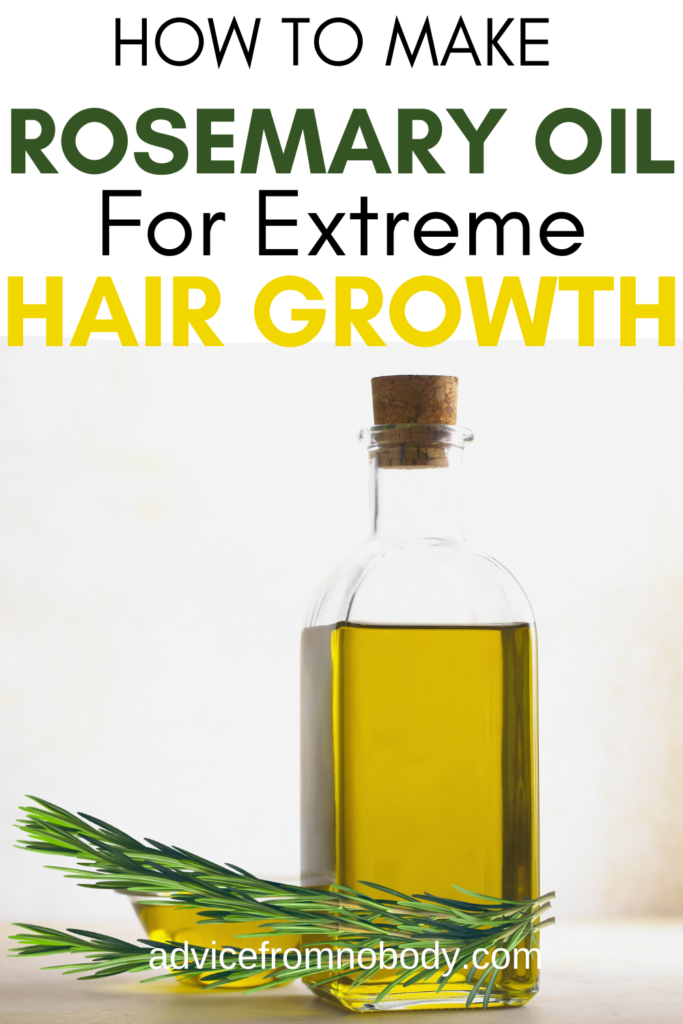
HOW TO MAKE ROSEMARY OIL FOR EXTREME HAIR GROWTH

We all desire thick hair, so it’s likely that finding ingredients and products that support the overall health of our hair is one of your hair care goals.

The newest hair care craze, thanks to TikTok, is rosemary oil, which is said to promote hair growth. Can this essential oil, however, really promote hair growth?

We discuss whether or not rosemary oil genuinely promotes the growth of new hair in order to differentiate fact from fiction.

What Is Rosemary Oil?

The rosemary plant is an evergreen shrub with needle-like leaves and a woodsy scent that is used to make rosemary essential oil.

The herb has been used for years to treat a variety of diseases, for aromatherapy, an important skin-care ingredient, as well as in hair care, and as a result, it is a prominent ingredient in many of today’s beauty products.

Studies have proven that it has a wide range of health applications.

Rosemary oil provides a number of advantages for hair, including the ability to reduce itching and enhance blood flow to the hair follicles.

Additionally, rosemary oil is a powerful antioxidant (which means it protects your hair from environmental aggressors) and has anti-inflammatory and antibacterial qualities to remove buildup.

It’s also understandable that there is increased interest in discovering natural remedies to assist with hair growth, either to promote longer, healthier hair or in individuals with hair thinning.

Benefits Of Rosemary Oil On Your Hair

There are numerous possible advantages of rosemary essential oil on your hair.

It contains substances with anti-inflammatory, antibacterial, and antioxidant properties.

All of these qualities help soothe itchy scalps, and antioxidants in particular shield your hair from aggressors like pollution. This usually results in thicker hair and a healthier scalp.

So does rosemary actually help your hair grow? The short answer is yes.

It might encourage thick, healthy hair. The oil can speed up cell growth and turnover, which may function as a natural stimulant for thicker hair.

It is utilized for both hair regrowth and prevention of hair loss because it is an anti-inflammatory.

It possesses qualities that increase blood circulation to the scalp, sealing in moisture, and nourishing the hair while getting rid of any bacteria that clog hair follicles.

More advantages of Rosemary hair oil are:

-Encourages blood circulation in the scalp, which may aid in the “waking up” of dormant hair follicles which prevents hair from aging too quickly

-Reduces dandruff

-Calms an itchy and inflamed scalp that may be brought on by psoriasis and scalp eczema.

-Boosts hair volume for fuller hair and encourages glossy strands

-Strengthens the roots and follicles of your hair which stops hair from breaking

-Restores damaged hair and might lessen scalp itching

Is Using Rosemary Oil On Your Hair And Scalp Safe?

Theoretically, anyone with any hair type could use rosemary oil, but some might wish to exercise caution.

Natural rosemary oil extracts and the raw material itself, like all plant extracts, have the potential to irritate the skin and trigger allergic responses.

Especially when using the oil alone may serve as a trigger for irritation.

Contrary to what the TikTok videos would imply, pure rosemary essential oil is quite strong and might irritate the scalp or even result in hair loss.

By creating conditions that maximize the function of the hair follicle, maintaining a healthy scalp is essential to promoting healthy hair development.

To that end, if you’re going to apply rosemary oil to your scalp, make sure you dilute it with a carrier oil-based treatment before applying it.

Mix four to five drops of rosemary oil with a teaspoon of your carrier oil, preferably coconut or castor oil. After that, you can evenly massage it into your scalp.

It is also claimed that the motion of massaging your scalp may act as a trigger for promoting hair growth.

By stretching hair follicle cells, which in turn stimulates the follicles to grow thicker hair, scalp massaging can help enhance hair thickness.

And remember never put rosemary oil on skin that is swollen or damaged.

How To Make Rosemary Hair Oil

Below is a simple recipe for making rosemary oil for hair growth. The end product will be rosemary-infused oil!

What You Need

-2 Tablespoons dried rosemary
-1 Cup of coconut oil
-Saucepan
–Tea strainer
–Funnel
–Container for storage

Directions:

-Add one cup of coconut oil to your saucepan.

-Then, add your rosemary to the medium-low heat on the stove. For two to three minutes, while stirring, the contents of the pan should melt all the coconut oil.

-Up until you notice the oil beginning to change color, keep heating the rosemary in the coconut oil over a low temperature. It can take another two to three minutes. Turn off the stove and allow the oil to finish cooling.

-Then, using a tea strainer, coffee filter, or clean cloth, pour it into a jar or an amber bottle.

Your rosemary oil is protected from light, which can cause it to oxidize or quickly go bad, with an amber bottle.

I do not suggest using fresh rosemary as your oil may become rancid and might grow harmful Botulism bacteria.

How To Use Rosemary Oil On Your Hair

All hair types can benefit from rosemary oil. The qualities of this oil help to maintain healthy hair follicles and stop more harm.

While you can use rosemary oil on your hair’s ends, it works best when applied to the scalp.

Twenty minutes prior to getting into the shower, massage your rosemary hair growth oil into your hair and scalp, ideally using it as a pre-poo hair mask.

This will energize and nourish your scalp.

You can also incorporate a few drops into your shampoo or the hair products you use after a shower. It also works best when used as a leave-in product because that increases the likelihood that its effects will be felt.

I would always advise using rosemary oil with other hair-growth-supporting products like shampoos and serums.

A healthy diet and supplementation are also essential.

[jetpack-related-posts]

Here’s How Often You Should Wash Your Hair, Depending on Your Hair Type

Filed Under: Hair // 04/07/2023

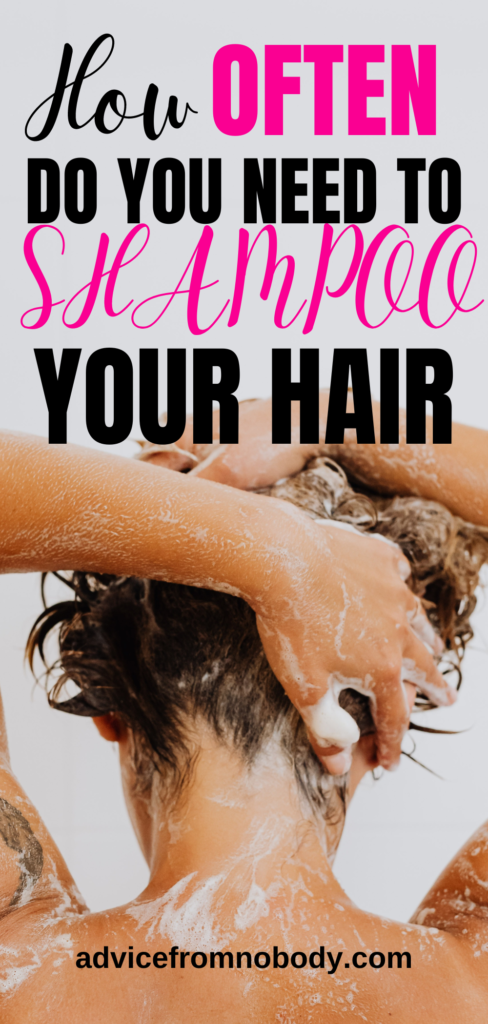
how often do you need to wash your hair

Maintaining a wash day routine when caring for your hair is common practice. Some people only do it once each day, while, some people prefer once or twice per week.

But what if you’re not shampooing your hair frequently enough—or worse, too much and you’re just stripping it?

In order to ensure that your strands feel and appear their best, we found out just how frequently you should wash your hair.

How Often Should You Shampoo Based on Hair Type

How frequently you should wash your hair depends greatly on your hair type.

But rather than simply following a strict timetable, you should listen to what your scalp and hair need. Itching, flaking, product buildup, greasy strands, and naturally any unpleasant odors are indications that you should wash or cleanse your hair.

Straight Hair

To prevent oil accumulation, people with fine, straight hair (type 1) should wash their hair two to three times per week.

Those with fine strands often feel greasier throughout the week because there is less surface area on the head for oil to collect.

Curly or Wavy Hair

Type 2 or type 3 strands, which are buoyant loop curl patterns and flexible “S” shape curl patterns, are common identifiers for people with wavy to curly hair.

I would recommend washing at most twice a week for this hair type because it needs more oil on the head to keep your strands hydrated.

Coily Hair

Coily textures are classified as having type 4 hair, which also contains types 4A, 4B(my hair type), and 4C. 4B is a tighter coil with a less distinct curl, 4C is a zigzag design, and 4A has an “S” or ringlet pattern.

It’s best to limit your washdays to once a week if you have this hair type.

This more delicate hair type can lose the oils necessary to keep the strands hydrated if they are washed too frequently, type 4 hair is just naturally drier hair.

When shampooed once a week with the proper products, the scalp can absorb the nutrients used on the hair.

Make sure to use a moisturizing shampoo and conditioner if your hair feels particularly dry.

What Washing Your Hair Too Often Can Do

So, how frequently should you shampoo? A daily hair wash is certainly excessive.

For your hair to remain hydrated, it needs those oils.

Because it helps the hair retain more moisture and makes the shampoo more gentle, I suggest using only a cleansing conditioner in one wash if you feel the need to cleanse your hair every day because you work out.

Dulls Your Hairs Shine

Since your hair is being deprived of its natural oils when you overwash it, one frequent side effect is a loss of shine which causes your hair to look dry and dull.

This is particularly true if your product doesn’t shield the keratin protein and color from damage if you have colored hair.

Scalp Imbalance

Overwashing your hair can mess with the pH, pH equilibrium, and scalp microbiome. Your hair will feel like straw as a consequence, and your scalp will feel dry, irritated, and inflamed.

The oil generated by the scalp, or sebum, is our natural food for the scalp and hair; it moisturizes and straightens the strands.

A tight, dry head and dry, coarse, breakable strands can result from washing too much away, which creates an imbalance.

Overwashing your hair can make it even oilier if you have an overactive, oily skin.

Additionally, hair can become limp and battle to maintain a style. I advise using a thickening shampoo or conditioner if your hair starts to become desensitized to help it recover its strength and fullness.

Effect Of Not Washing Your Hair Enough

Although how long you go between washes really relies on you, it’s probably time for a wash once you start to notice oil buildup on your scalp and your strands begin to get flatter.

When there is buildup on the skin, it must be detoxified and cleansed to get rid of extra sebum and debris.

Scalp Conditions

Washing your hair will help you prevent scalp skin issues, just like when you wash your face and body.

If you wash very rarely, the oil may begin to accumulate in layers, clogging scalp follicles and promoting acne on the scalp.

Psoriasis, alopecia, and dandruff can all develop as a result of not cleaning your hair.

Additionally beneficial for circulation, stimulating the scalp, oxygenation, relaxation, and de-stressing the hair, cleansing should be part of your daily routine rather than a burden.

[jetpack-related-posts]

DIY Bath Bomb Recipe

Filed Under: DIY Beauty // 04/05/2023

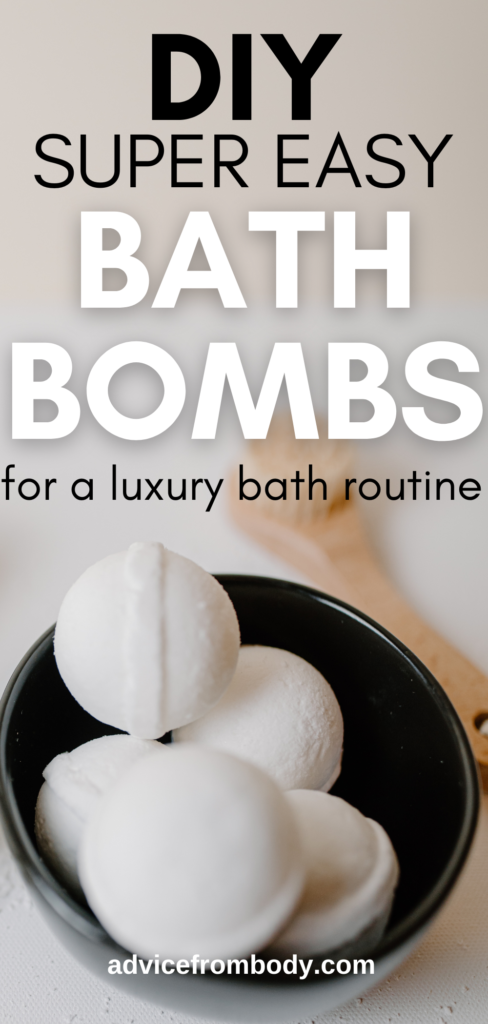
homemade bath bomb recipe

This easy-to-make DIY only requires a little mixing, some gentle spritzing, and a short period of molding, and by the end, you’ll have dozens of bubbling bath bombs in a variety of shapes and colors, which will smell and soften bath water as they bubble.

No matter who is on your list, they make wonderful presents. Play around with colors and scents; for instance, combine yellow and red to create orange, or try mixing lemon and lavender.

Bath bombs have become a hugely popular product to brighten at-home self-care. They make bath time fun for kids and relaxing for adults. This DIY bath bomb recipe allows you to enjoy the luxury bath at home without the expensive price tag.

Using common, budget-friendly ingredients, I’ll show you how to make these DIY Bath Bombs at home.

What You’ll Need

-Baking soda (aluminum free is best)

-Cornstarch

-Citric acid

-Spritzer bottles

-Food coloring or you can use Mica powder which is a natural soap colorant that is safe for use in bath bombs.

-Essential oils

-Baking molds

-Epsom salt (magnesium sulfate)

-Coconut oil or Argon oil

How To Make Bath Bomb

Step 1

Sift 1 3/4 cup baking soda, 1 cup citric acid, 1 cup of Epsom salt, and 2 cups cornstarch to make a powdered mixture and run it through a sieve to remove chunks. To make different tints, fill small spritzer bottles with water and add about 6 drops of food coloring to each.

Or if you’re using mica powder you’ll mix that in with the dry ingredients.

Step 2

Pour 1 cup of powdered mixture into a glass bowl. Then lightly spritz, stirring after each spritz, until the powder is your desired color. Add water slowly, so the mixture does not fizz. If mixing two tints, alternate colors as you spritz. You will do this with only water and no food coloring if you’re using mica powder.

Check the consistency of the powder with your fingers; when it can be tightly packed or shaped, stop spritzing—this may take a little while.

Step 3

Select an essential oil. Add 5 drops if it’s one of the stronger scents—like peppermint or lavender—6 if it’s a weaker one—like lemon or grapefruit. You can choose different scents based on what you need for that day. Also, take this time to add about 10 drops of coconut or argon oil to the mixture

Mix it well before firmly packing the mixture into small baking molds. I like to use 1/4 cup for each fizzy, which is good for one bath. Allow the mixture to set for two hours, then pop out carefully. Repeat with different tints and essential oils for the remaining powder.

Step 4

Store in an airtight container for up to six months. You can also wrap them in plastic wrap. If you want to get really fancy, you can use shrink-wrap sleeves to wrap your bath bombs. Heat them with a blow dryer or heat gun to shrink the wrap around your homemade bath bombs.

When you’re ready to use the bath bomb, simply drop it in your bath water and let it fizz and dissolve. It should take about 30 seconds for it to dissolve completely.

[jetpack-related-posts]

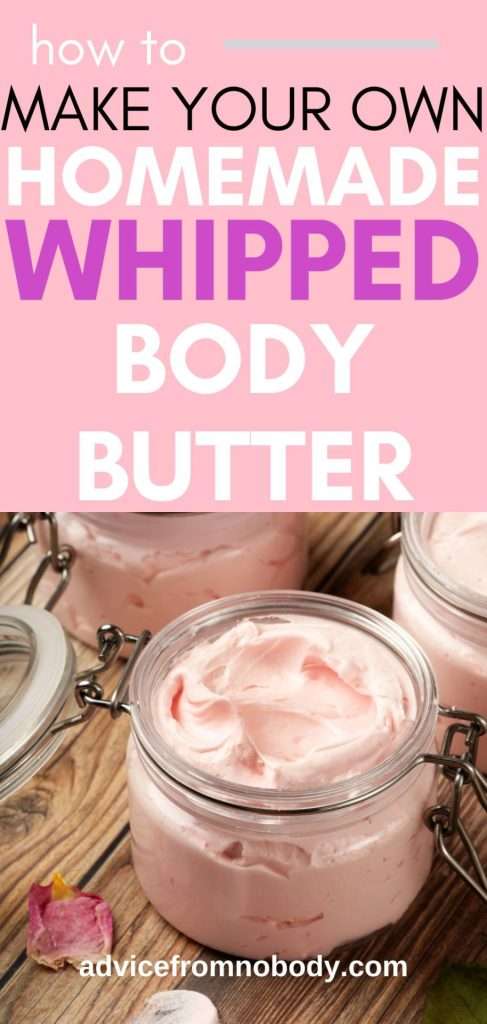
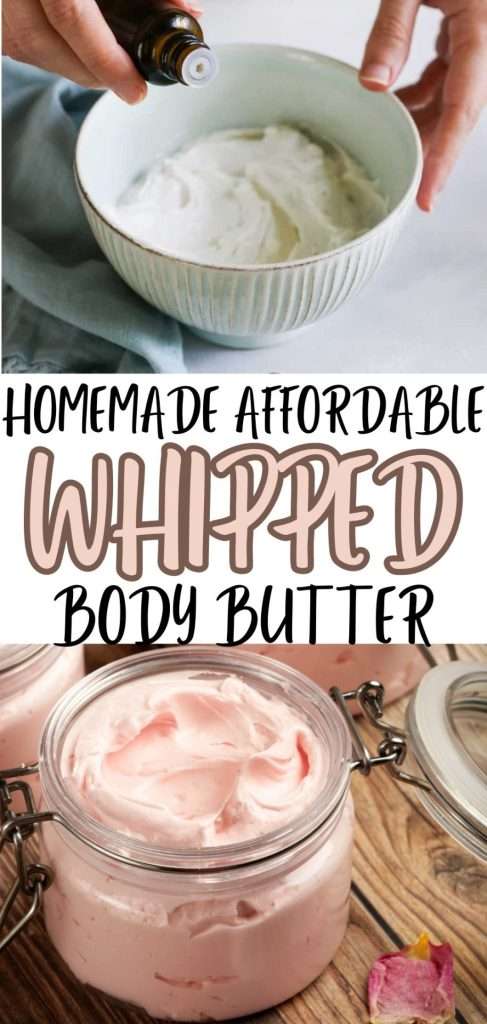
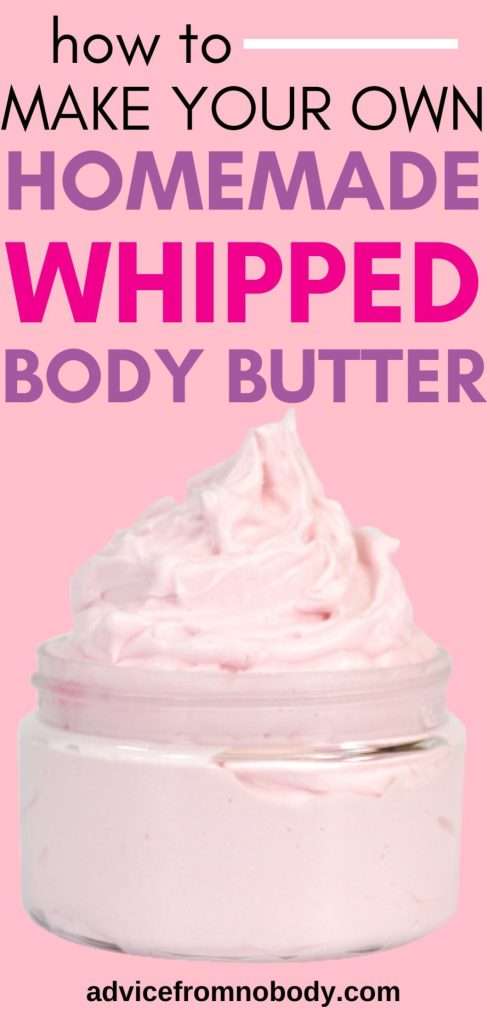
How To Make Whipped Body Butter

Filed Under: DIY Beauty // 04/05/2023

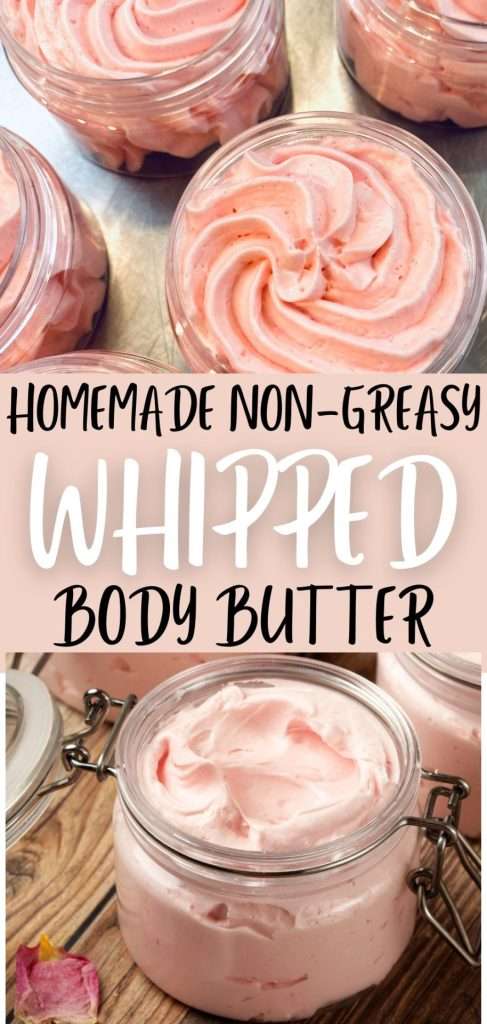
homemade non-greasy whipped body butter

This DIY whipped body butter recipe is perfect for the winter months if you have really dry skin.

If you’re anything like me, your skin gets super dry in the cold, and well I love in a really cold area. In the winter, when the air is so dry and I’m taking hot showers, my skin gets so dry.

This body butter goes on smooth and is so nourishing for the skin.

Anything that you put on your skin can absorb right into your body. That is why I love making my own homemade products.

All the ingredients are pure enough to cook with and I know exactly what goes into it.

For this recipe, you only need a few basic ingredients: shea butter, cocoa butter, and coconut oil. I also add essential oils for scent and the amazing health properties they have.

This body butter recipe is so light and fluffy it almost feels like a cloud!

In this post, you’ll learn how to create homemade body butter from natural ingredients!

What Is Body Butter?

You’re in for a surprise if you’ve never used body butter!

It is similar to butter for your skin, well it’s exactly butter for your skin. Anyone can easily make their own body butter at home.

It’s so easy; all you have to do is combine your favorite oils by melting and whipping them together and you’ll have a lovely body butter.

Although I adore my standard whipped coconut oil moisturizer, it dissolves at room temperature and can sometimes be a little too greasy.

You can choose to experiment with some of your favorite plant-based butters because we all need a decent moisturizer that isn’t overly oily and creates a lovely body butter recipe.

This homemade body butter has a beautiful scent and sensation.

Additionally, it is incredibly nourishing and will make your skin feel incredibly smooth.

You can leave it as it is or add essential oils to create a great-smelling body butter for yourself or as a gift. Plus, it’s really great if you have sensitive skin.

How To Make Whipped Body Butter

Ingredients for Whipped Body Butter:

  • 1/3 Cup coconut oil: There is nothing else like organic coconut oil for your skin! Coconut oil can penetrate the skin more thoroughly than other products due to its low molecular weight and way of attaching to proteins. This is the one I use.
  • 1/3 Cup shea butter: For dry skin, shea butter is a powerful emollient. It’s the ideal ingredient to include in your body care recipes because of its emollient qualities, particularly in body butter. This is the one I use.
  • 1/3 Cup cocoa butter wafers: Lotions, creams, and body butter will gain a viscous and creamy consistency from cocoa butter, which softens at body temperature. Vitamin E, another natural antioxidant, as well as a number of other vitamins and minerals, are also present in cocoa butter. These are the ones I use.
  • 1/3 Cup jojoba oil: Low comedogenic jojoba oil is a carrier oil that moisturizes and calms irritated skin. Sweet almond oil, which contains fatty acids and vitamins A and E and penetrates the skin rapidly, is a suitable alternative to jojoba oil if it is not available. This is the one I use.
  • 2 Teaspoon arrowroot powder: Due to its oil basis, this moisturizer may feel a little greasy on some skin types. Cornstarch or arrowroot powder can be added to reduce the greasy sensation on your skin. In the absence of arrowroot flour, corn starch or tapioca starch are suitable alternatives. This is the one I use.
  • Essential oils (optional): These plant-based oils are better than synthetic fragrances because they are all-natural. Don’t go overboard, though; just a few droplets will do to flavor homemade body butter.

Also read: 21 Soothing DIY Bath Salt Recipes With Essential Oils For Every Mood

Why These Ingredients:

  • Coconut oil – is moisturizing, can help promote wound healing, and has antibacterial, antifungal, and antiviral properties.
  • Jojoba oil – is very moisturizing, and promotes wound healing while also having anti-inflammatory properties. Jojoba oil can also have anti-aging properties.
  • Cocoa butter – can help keep in moisture by giving skin a protective barrier.
  • Shea butter – is rich in antioxidants, highly moisturizing, and promotes skin healing.
  • Essential oils. – because they smell nice and they have many great properties.

Directions for Making Your Whipped Body Butter:

  • Melt the coconut oil, cocoa butter, and shea butter in a double boiler or saucepan over low heat to create your body butter. In the absence of a double boiler, a sizable glass measuring cup will do.
  • Then turn off the heat and stir in the jojoba oil and essential oils, if using, to the warmed cocoa butter and oils. To add the essential oils, just mix thoroughly.
  • Place the mixture in the refrigerator after pouring it into a medium glass bowl. About two hours of cooling time is required. As an alternative, you could chill the oils in the fridge.
  • When the mixture is completely solid, take the dish out of the refrigerator, put it in your stand mixer, and whip the body butter with it (a hand mixer also works if that’s what you have). When the body butter is light and airy, add the arrowroot flour and beat again.
  • Finally, scoop the body butter into containers and store it in a cool, dry place.

Tips For Making DIY Body Butter

  • This makes a really great gift for friends and family.
  • You can double or triple this recipe.
  • Be careful using citrus oils, like lemon or orange, since they can make your skin sensitive to the sun. If you do use them, don’t go out in the sun for awhile. Or, simply use this body butter at night.

How To Store Homemade Whipped Body Butter

The oils and butter in this dish could melt if kept in a warm environment because they are natural and oily in nature.

This body butter should therefore be stored in a cold, dry environment. Then, if the oils begin to melt by accident, you can refrigerate the butter and re-whip it.

If stored in an air-tight jar in a cool dark place, this body butter will keep for up to 6 months. If you would like to keep it for longer, you could add preservatives to it.

Although I have not directly added a preservative to this whipped body butter, I would choose Geogard ECT (Preservative ECO, Plantaserv M). In the mixture, this preservative should make up 0.6% to 1%.

I recommend opting for natural preservatives like vitamin E oil or rosemary extract if you intend to store the body butter for an extended period.

These natural preservatives can help prolong the shelf life of your homemade product without introducing harsh chemicals.

Another option to consider for extending the shelf life is to store the body butter in smaller containers.

This reduces the exposure to air and contaminants each time you open a jar, helping to maintain the freshness of the product for a longer duration.

Additionally, it’s essential to keep your body butter away from direct sunlight and high temperatures, as these can accelerate the breakdown of the natural ingredients and cause the product to spoil more quickly.

For those who enjoy experimenting with different scents and textures, you can customize this recipe further by incorporating different essential oils or botanical extracts.

Lavender, chamomile, or rosemary essential oils are popular choices for their soothing properties, while citrus oils like lemon or orange can lend a refreshing scent.

You could also try adding a tablespoon of aloe vera gel to the mixture for added hydration and soothing benefits, especially beneficial for sun-exposed or irritated skin.

Furthermore, if you prefer a firmer body butter, you can adjust the ratio of oils and butters in the recipe.

Increasing the amount of cocoa butter or shea butter will result in a firmer consistency, while adding more liquid oils will make the body butter softer and more spreadable.

Experimenting with different combinations of oils and butters can lead to unique textures and scents that cater to your specific skincare needs and preferences.

Have fun exploring and creating your signature homemade body butter recipe!

Pin For Later!

how to make your own homemade whipped body butter
homemade affordable whipped body butter
how to make your own homemade whipped body butter
[jetpack-related-posts]

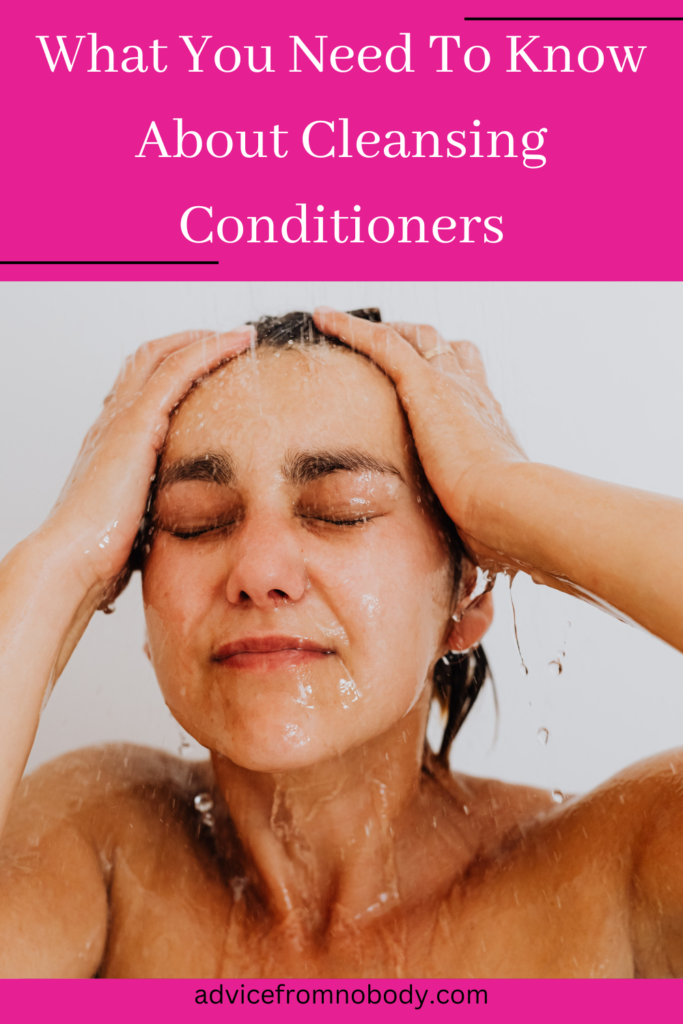
Everything You Need To Know About Cleansing Conditioners

Filed Under: Hair // 03/18/2023

cleansing conditioners

While shampooing might seem like the simplest step in your hair care regimen, it’s one of the most divisive topics in the beauty industry.

Is it better to wait one or two days between hair washes or wash your hair every day? Should you actually use dry shampoo instead of regular day-two lather and rinse? Should you even use shampoo?

The “no poo” method, which is washing your hair without using traditional shampoo, has been a hot topic thanks to cleansing conditioners.

Do you have general questions about cleansing conditioners and, more significantly, do you know if you have to incorporate one into your routine? You can discover everything you need to know whether you have dark brown or ash blonde hair by continuing to read.

What Is A Cleansing Conditioner?

The delicate components in cleansing conditioners nourish, detangle, and add shine to your hair while still cleansing them.

Cleansing conditioners can be thought of as both shampoo and conditioner in one. Cleansing conditioner, as opposed to traditional shampoo, is free of detergents and foaming agents that, if misused, may leave hair dry, dull, or damaged.

To fully rinse, simply massage a few pumps of cleansing conditioner into wet hair as you would with regular shampoo. Distribute the product evenly throughout your hair.

If you’re unsure about whether to completely substitute your shampoo with a cleansing conditioner, speak with a hair care professional to learn what’s ideal for you.

Who Do Cleansing Conditioners Work For?

The ability of cleansing conditioners to work on various hair types is what makes them really great.

Since it helps to restore your hair without requiring an additional step (shampooing), cleansing conditioner is wonderful for overly bleached or highlighted hair that gets dried out by regular shampoos, dry, brittle hair, curly or frizzy hair, and really all hair types.

For those looking for a nourishing treatment as well as those with color-treated hair who wish to prevent color loss, cleansing conditioners are really helpful.

Whatever your hair issues are there are cleansing conditioners made to handle them.

Sometimes your hair isn’t the problem, you simply need a break from your typical shampoo regimen, it may be time to switch to a cleansing conditioner for a few weeks.

Thankfully, we’ve narrowed down my top picks to make your search simpler.

Benefits Of Cleansing Conditioners

They Are Gentle On The Hair

Cleansing conditioners are substantially gentler than conventional shampoo-and-conditioner combos. They frequently don’t contain sulfates, which is why.

The hair is cleansed less aggressively because there is no harsh cleansing effect, which minimizes dryness.

By using emulsion technology and emollient oils to remove dirt, debris, and surface oils, they also clean without over-stripping. The correct level of moisture can thus be maintained in the hair strands.

They Are Sulfate Free

They are typically Sulfate-free and which means they usually take a long time to lather.  

They Save You Time

They are great if you want to save time and money, you get to skip an extra step in your wash day routine, and since you can use them once and then go a week or so without shampooing it’s great.

Work For All Hair Types

Co-washing is perfect for all hair types.

This means you can use it if you have damaged hair or fine hair or color-treated hair—conditioning cleansers can work with your hair. They gently cleanse better than traditional shampoos and leave hair and scalp clean and moisturized.

How To Use Cleansing Conditioners

Here’s a step-by-step guide to a basic cleansing conditioner routine:

1. As you normally would, wet your hair.

2. Massage your scalp and hair strands with a generous amount of cleansing conditioner of your choice. Don’t anticipate the product to lather as you work it through your hair; instead, take your time.

3. Keep the product on for the specified period of time.

4. Thoroughly rinse off the product. Not using enough water results in greasy residue, which is not the same thing as moisturized locks, so make sure to thoroughly rinse the product out.

5. To add even more moisture, condition your hair with your regular hair conditioner, as usual, dry, and style your hair.

Cleansing Conditioner Do’s And Don’ts

Make sure to get the most out of this new haircare approach by following advice from beauty experts.

They Shouldn’t Replace Your Shampoo

Shampooing is a great way to get rid of dirt, grime, and residue from your scalp, you should still use it at least once a week for clarifying purposes and to maintain the health of your scalp.

To that end, be sure you only shampoo when absolutely necessary and use a good shampoo that does not contain harsh minerals.

Instead of totally replacing shampoo in your hair care routine, think of cleansing conditioners as an additional step that completes it.

To find the ideal balance between how frequently you should shampoo and use cleaning conditioner, do some trial and error.

Be Very Generous With The Cleanser

While you’ve probably learned that using a dime- or even pea-sized amount of ordinary conditioner is the best practice (rolls eyes), this isn’t the same advice for a cleansing conditioner.

To properly soak your hair and ensure that it receives the benefits of your selected formula, you should be using a very generous amount of it or it won’t work well.

My Favorite Cleansing Conditioners To Try

If you think your hair might use a boost because it’s dull, damaged, or otherwise uncontrollable, try including a cleansing conditioner in your routine. Choose the top product you can locate to ensure that the ingredients are of high quality:

As I Am Coconut Cowash Cleansing Conditioner

Working with dry curls? Gently cleanse, and condition in one step with As I Am Coconut Cowash Cleansing Conditioner. This co-wash helps aid in retaining moisture and helps maintain the natural curl pattern for touchable texture.

RENPURE Mint Cowash Cleansing Conditioner

The Renpure Vanilla Mint Cleansing Conditioner is formulated with natural ingredients like coconut, manuka honey, mint, tea tree oil, argan, bamboo, and lemon sage. It protects the hair from damage caused by chemical shampoos.

Creme of Nature Creamy Hydration Co-Wash Cleansing Conditioner

If you’re dealing with extra dry, brittle hair, you’ll need a cleansing conditioner formulated to combat extreme dryness. Infused with argon oil, the Creme of Nature Creamy Hydration Co-Wash Cleansing Conditioner envelopes the hair fiber to condition and gently smooth away impurities. 


[jetpack-related-posts]

DIY Homemade Bath Salts On A Budget

Filed Under: DIY Beauty // 03/14/2023

home made bath salts for relaxation

Making your own bath salt blends at home is surprisingly simple.

There is nothing better than a hot bath after a long, stressful day, except maybe a hot bath enhanced with aromatic bath salts, of course.

Making your own bespoke bath salt blends to meet your requirements (such as easing tight muscles, easing the day’s stress, or softening skin) and then spicing them up with your favorite essential oils is surprisingly simple.

You can even use food coloring to give your salt mixture a lovely, calming hue as a final touch.

What You Need

– A container to store the bath salts in.

– Coarse sea salt.

– Epsom salt (Epsom salt is also known as magnesium sulfate. It’s a chemical compound made up of magnesium, sulfur, and oxygen, this is different from the coarse sea salt).

– Baking Soda.

– Essential oils of your choice (essential oils have different benefits that you can add to your bath salts, so choose the essential oils based on your specific needs).

– Food coloring to make the bath salts look extra fancy and professionally made.

How To Make The Bath Salt

Step 1

Mix 6 parts coarse sea salt, 3 parts Epsom salts (to relieve sore muscles, promotes sleep, and reduce inflammation and stress), and 1 part baking soda (for cleansing and detoxifying properties that may help to purify your body and boost immunity as well as soothe skin irritation) in a big bowl.

Step 2

Add a few drops of essential oils (Sea salts and essential oils are a great combination. The relaxing properties of hot water complement the effects of well-chosen salts and essential oils) and combine.

Step 3

Add food coloring drops until you get the desired color.

Now that you’ve made your bath salt, scoop it into your previously prepared container and store them away to use for your next hot bath.

Essential Oil Blends For Your Bath Salts

Try these essential oil blends in your DIY bath salts for the following benefits:

Relaxing Blend

2 Parts Lavender essential oil for every 1 part Vetiver essential oil.

Mood-Boosting Blend

2 Parts Lavender essential oil for every 1 part Lemon essential oil.

Essential Oil Blend For Soft Skin

Equal parts Lavender essential oil, Frankincense essential oil, and Palmarosa essential oil.

Anti-inflammatory Blend

2 Parts Lavender essential oil for every 1 part Rosemary essential oil.

Muscle Relaxer Blend

2 Parts Peppermint essential oil for every 1 part Rosemary essential oil.

[jetpack-related-posts]

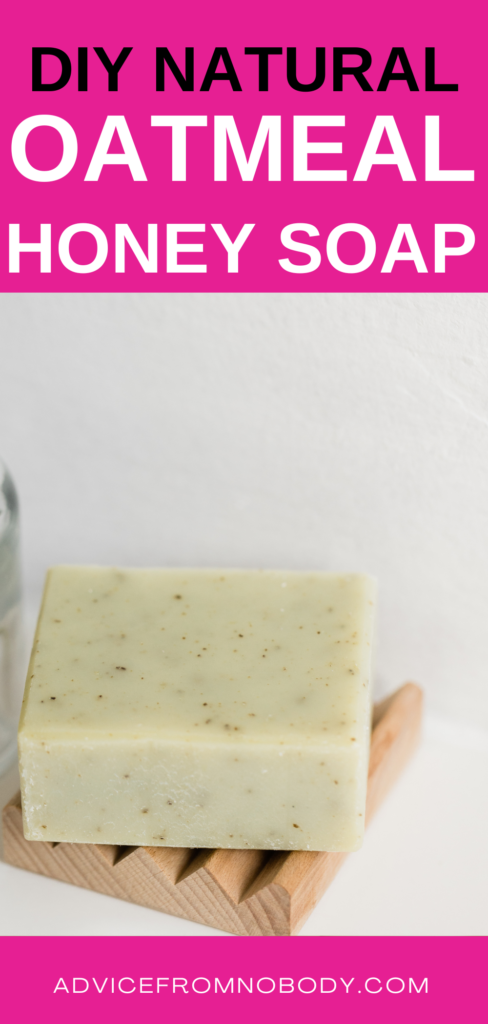
DIY Honey Oatmeal Soap Recipe: For Healthy and Hydrated Skin

Filed Under: DIY Beauty // 03/14/2023

diy soap for all skin types

This regular bar of soap can be transformed into an exfoliating soap bar with a wonderful scent by just adding honey and oatmeal and is perfect for sensitive and dry skin.

This natural soap made from organic rolled oats and honey will leave your skin feeling incredibly smooth and looking brilliant.

Oatmeal And Honey Soap Recipe

Oatmeal has many benefits that’s why it’s utilized in oatmeal milk baths and can treat a variety of skin irritations because it has so many wonderful skin-friendly properties.

You can make use of instant oats, colloidal oatmeal, or oatmeal powder. Oatmeal can be turned into powder by mixing it quickly in a blender.

We’ll be using powdered oatmeal for this recipe, which you can create by blending plain rolled oats.

What You Need

– 2 Pounds oatmeal melt and pour soap base.

– 1 Cup organic rolled oats that you’ve blended into a fine powder.

– 2 Tablespoons of Raw honey.

– Soap mold.

– Essential oil of your choice (I like to use either vanilla, lemon, or lavender essential oils).

How To Make Your Honey Oatmeal Soap

– Cut the oatmeal melt and pour soap base into small chunks and place them into a double boiler.

– Melt over medium heat. Stirring occasionally with a wooden spoon. 

– Remove from the heat when it’s fully melted.

– Add in the oatmeal powder, essential oil, and raw honey. Stir to mix.

– Pour into soap molds.

– Allow it to harden then remove it from the molds.

Now that you’re done, they are ready to use for your next self-care day whenever you take your next shower or bath.

[jetpack-related-posts]

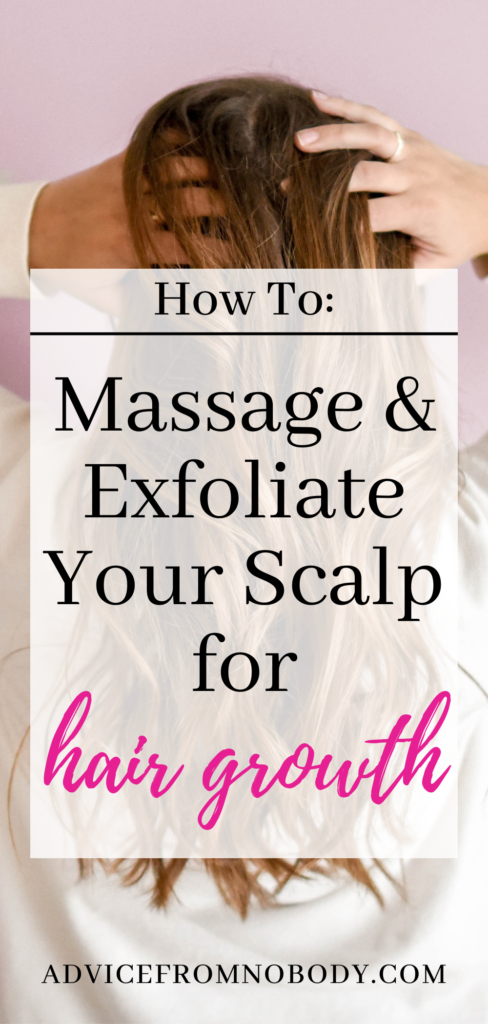
How to Massage and Exfoliate Your Scalp for Optimal Hair Growth

Filed Under: Hair // 03/09/2023

how to massage and exfoliate your scalp for hair growth

Similar to how facial exfoliating removes dead skin cells and massages ease tension in the muscles—both of which are excellent self-care practices. What you may not realize is that each of these techniques has advantages for your scalp as well; in fact, regular exfoliation and scalp massages may even result in longer, stronger hair.

What Is Scalp Exfoliation?

Facial exfoliation eliminates flakes, grease, and buildup, which is the same effect it has on your scalp. Similar to facial exfoliation, there are two types of scalp exfoliation: physical and chemical.

As hair growth begins at the scalp, getting rid of buildup (from excess oil or styling product residue) is helpful. Exfoliation, which unblocks anything obstructing hair follicles, can help with that.

The downside to exfoliation is that if the technique or product can be extremely abrasive or severe, it might damage the scalp and follicles. If they are not used together with other moisturizing products in a hair care routine, several exfoliants can also be drying.

How to Exfoliate the Scalp

Before you begin exfoliating, you need to choose your preferred method of exfoliation, chemical or physical.

I personally prefer to rotate between the two, using a clarifying shampoo to exfoliate once a month and a DIY scalp scrub to gently exfoliate every two weeks or so.

If you choose a physical exfoliation method, you will use your hands, a tool, or a mask containing granules to remove dry skin cells.

When you use chemical exfoliants look for a solution with active chemicals that are suitable for use on the scalp, I prefer to use the Verb Ghost Exfoliating Scalp Nectar.

Physical Exfoliation 

Use products made with tiny granulated beads, a scalp brush, rough gloves, or your fingertips to physically exfoliate the scalp. 

1. Apply your fingertips (with the product on it) or your tool of choice to your scalp using gentle to medium pressure. 

2. For a few minutes, move your tool or fingertips in tiny circles. 

3. Wash your hair to get rid of flaky skin cells (and any residual product, if used).

Chemical Exfoliation 

1. When using most chemical exfoliants, you will apply the product directly to the scalp and massage it in with your fingertips.

2. Allow the exfoliant to sit on the scalp for 15 to 20 minutes, or whatever amount of time the label suggests.

3. Rinse completely and follow up with a moisturizing shampoo or a cleansing conditioner and then a deep conditioner to replenish lost moisture.

What Is Scalp Massaging?

Though they are somewhat similar, scalp massage and scalp exfoliation are two different processes. Massage manipulates the head and scalp muscles, relieving stress and boosting blood flow. Moreover, it activates the sebaceous glands, which release sebum, a natural oil that maintains the health of the scalp.

The benefits of scalp massages include stress relief, an increase in blood flow (which promotes hair growth), and the production of skin-nourishing sebum. They can also gently exfoliate dry, irritating dead skin while calming the scalp.

The effects of scalp massages are generally less negative than those of exfoliation. It is impossible to overdo this treatment, which encourages healthy hair development. Nevertheless, if you massage too vigorously, you risk irritating the skin, and even perhaps infecting it.

How To Massage The Scalp

It’s easy to massage the scalp, and you can do this whether your hair is wet or dry.

Press your fingertips with light to medium pressure into your scalp. Spend a few minutes moving your fingertips in little circles over tense areas. I like to do this right after I’ve applied a hot oil treatment to really get the hair oils to penetrate my scalp.

To hydrate and calm the scalp during or after your massage, apply a soft hair oil, like coconut oil.

Are Exfoliating And Massaging Your Scalp Even Necessary?

You can increase the health of your hair every day by massaging your scalp, which is a useful and important activity. An essential component of hair care is massage. The hair follicles that are in charge of hair growth require improved blood circulation.

What about exfoliating the scalp? Due to the thoroughness of the procedure, maintain a cadence of once or twice every month. While everyone can benefit from a scalp massage and exfoliation, individuals with flaky and overly oily scalps will experience the most advantages for the health and growth of their hair.

[jetpack-related-posts]
  • « Previous Page
  • 1
  • …
  • 13
  • 14
  • 15
  • 16
  • 17
  • 18
  • Next Page »

Copyright © 2026 · Theme by Marketing Templates Co.

We use cookies on our website to give you the most relevant experience by remembering your preferences and repeat visits.Read More By clicking “Accept All”, you consent to the use of ALL the cookies. However, you may visit "Cookie Settings" to provide a controlled consent.
Cookie SettingsAccept All
Manage consent

Privacy Overview

This website uses cookies to improve your experience while you navigate through the website. Out of these, the cookies that are categorized as necessary are stored on your browser as they are essential for the working of basic functionalities of the website. We also use third-party cookies that help us analyze and understand how you use this website. These cookies will be stored in your browser only with your consent. You also have the option to opt-out of these cookies. But opting out of some of these cookies may affect your browsing experience.
Necessary
Always Enabled
Necessary cookies are absolutely essential for the website to function properly. These cookies ensure basic functionalities and security features of the website, anonymously.
CookieDurationDescription
cookielawinfo-checkbox-analytics11 monthsThis cookie is set by GDPR Cookie Consent plugin. The cookie is used to store the user consent for the cookies in the category "Analytics".
cookielawinfo-checkbox-functional11 monthsThe cookie is set by GDPR cookie consent to record the user consent for the cookies in the category "Functional".
cookielawinfo-checkbox-necessary11 monthsThis cookie is set by GDPR Cookie Consent plugin. The cookies is used to store the user consent for the cookies in the category "Necessary".
cookielawinfo-checkbox-others11 monthsThis cookie is set by GDPR Cookie Consent plugin. The cookie is used to store the user consent for the cookies in the category "Other.
cookielawinfo-checkbox-performance11 monthsThis cookie is set by GDPR Cookie Consent plugin. The cookie is used to store the user consent for the cookies in the category "Performance".
viewed_cookie_policy11 monthsThe cookie is set by the GDPR Cookie Consent plugin and is used to store whether or not user has consented to the use of cookies. It does not store any personal data.
Functional
Functional cookies help to perform certain functionalities like sharing the content of the website on social media platforms, collect feedbacks, and other third-party features.
Performance
Performance cookies are used to understand and analyze the key performance indexes of the website which helps in delivering a better user experience for the visitors.
Analytics
Analytical cookies are used to understand how visitors interact with the website. These cookies help provide information on metrics the number of visitors, bounce rate, traffic source, etc.
Advertisement
Advertisement cookies are used to provide visitors with relevant ads and marketing campaigns. These cookies track visitors across websites and collect information to provide customized ads.
Others
Other uncategorized cookies are those that are being analyzed and have not been classified into a category as yet.
SAVE & ACCEPT